|
 |
 |
 |
 |
 |
 |
 |
 |

 |
Austria Declares Intent To Join ESO
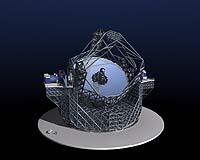
Vienna, Austria (SPX) Apr 28, 2008 At a press conference today at the University of Vienna's Observatory, the Austrian Science Minister Johannes Hahn announced the decision by the Austrian Government to seek membership of ESO from 1 July this year. Said Minister Hahn: "With membership of ESO, Austria's scientists will receive direct access to the world's leading infrastructure in astronomy. This strengthens Austria as a place for research and provides an opportunity for young researchers to continue their work from here. With this move, Austria takes an important step in the reinforcement of Europe's science and research infrastructure." The decision constitutes a major breakthrough for Austrian scientists who have argued for membership of ESO for many years. Seeking membership in ESO also marks a step towards the further development of the European Research and Innovation Area, an important element of Europe's so-called Lisbon Strategy. "ESO welcomes the Austrian bid to join our organisation. I salute the Austrian Government for taking this important step and look forward to working closely with our Austrian friends and colleagues in the years to come," commented the ESO Director General, Tim de Zeeuw. For Austrian astronomers, ESO membership means not only unrestricted access to ESO's world-leading observational facilities including the world's most advanced optical telescope, the Very Large Telescope, and full participation in the quasi-global ALMA project, but also the possibility to participate on a par with their European colleagues in the future projects of ESO, including the realisation of ESO's Extremely Large Telescope project (E-ELT), which is currently in the design phase. All these projects require some of the most advanced technologies in key areas such as optics, detectors, lightweight structures, etc. Austrian participation in ESO opens the door for Austrian industry and major research institutes of the country to take part in the development of such technologies with their associated potential for industrial spin off. The main centres for astronomical research in Austria are at the Universities of Graz, Innsbruck and Vienna. Furthermore scientists in the area of mathematics, applied physics and computer sciences already expressed their interest to contribute to the development of advanced technologies required by ESO's future projects. The Austrian bid for ESO membership will be formally considered by the ESO Council at its next meeting on 3-4 June and is subject also to subsequent ratification by the Austrian Parliament. Community Email This Article Comment On This Article Related Links Astronomy News from Skynightly.com
 GLOBE At Night 2008 Results A Solid Step Toward IYA 2009
 Washington DC (SPX) Apr 25, 2008
The international star-hunting activity known as GLOBE at Night inspired 6,838 measurements of night-sky brightness by citizen scientists around the world, including 660 digital measurements using handheld sky-quality meters. |
|
|

| The content herein, unless otherwise known to be public domain, are Copyright 1995-2007 - SpaceDaily.AFP and UPI Wire Stories are copyright Agence France-Presse and United Press International. ESA Portal Reports are copyright European Space Agency. All NASA sourced material is public domain. Additional copyrights may apply in whole or part to other bona fide parties. Advertising does not imply endorsement,agreement or approval of any opinions, statements or information provided by SpaceDaily on any Web page published or hosted by SpaceDaily. Privacy Statement |