|
 |
 |
 |
 |
 |
 |
 |
 |

 |
GLOBE At Night 2008 Results A Solid Step Toward IYA 2009
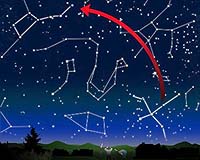
Washington DC (SPX) Apr 25, 2008 The international star-hunting activity known as GLOBE at Night inspired 6,838 measurements of night-sky brightness by citizen scientists around the world, including 660 digital measurements using handheld sky-quality meters. The third edition of GLOBE at Night was held from February 25-March 8, with assistance from the educational outreach networks of the Astronomical Society of the Pacific (ASP) to help spread the campaign to amateur astronomers and science centers. The 2008 campaign received measurements from 62 countries, surpassing last year's total of 60 countries. Just over 4,800 of the measurements came from the United States (with 48 states and the District of Columbia reporting at least one measurement). Observers in Hungary submitted the most measurements (380) from outside the U. S., followed by Romania, the Czech Republic, Costa Rica, and Spain, all with over 100 observations; Canada was next largest, with 95 measurements reported. These basic numbers fall roughly midway between the 2007 and 2006 results from GLOBE at Night, which may result from several factors. "While we have just begun to analyze the data, we have strong anecdotal evidence from our citizen-scientist network in North America that they experienced abnormally cloudy skies this year," says Connie Walker, GLOBE at Night project manager at the National Optical Astronomy Observatory (NOAO) in Tucson, AZ. "The timing of the March new Moon this year�which is required to give everyone sufficiently dark skies to properly observe the constellation Orion�also fell further into summer vacation for our partners in Chile and some other Southern Hemisphere countries, which made it more difficult to attract large numbers of students." The classic GLOBE at Night program directs students, families, and the general public how to observe and record the number of stars visible in the constellation Orion, as seen from different locations. Observers report their results online by comparing their view of Orion with a set of template images on the program's Web site, which shows the number of stars in the constellation for a range of visibilities from bright skies to very dark. The digital version of GLOBE at Night takes advantage of low-cost digital sky-quality meters manufactured by Unihedron of Ontario, Canada, which can make a highly repeatable direct measurement of integrated sky brightness. Both the "classic" GLOBE at Night exercise that anyone can have fun doing with their unaided eyes, and a digital effort to obtain precise measurements of urban dark skies will be conducted again in March 2009, as one of several start-hunting efforts connected to the "dark-skies awareness" cornerstone program of the International Year of Astronomy (IYA) 2009. GLOBE at Night 2009 will occur in the latter half of March. These dates should provide better conditions for schools in the Southern Hemisphere, and will likely coincide with Earth Hour 2009 as well, Walker says. A first-look at results from GLOBE at Night 2008 was presented by project leaders who attended the March 2008 meeting of the National Science Teachers Association in Boston. More detailed analysis of the GLOBE at Night 2008 data will be presented at the May 31-June 4 annual meeting of the Astronomical Society of the Pacific in St. Louis, to be held jointly with the American Astronomical Society. The meeting's primary focus is national and regional training and planning related to IYA 2009. Community Email This Article Comment On This Article Related Links GLOBE at Night 2008 Astronomy News from Skynightly.com
 Northrop Grumman Awarded Five Study Contracts For NextGen Astronomy Missions
 Redondo Beach CA (SPX) Apr 04, 2008
Northrop Grumman is a partner on five contracts awarded by NASA to investigate concepts for next-generation space telescopes. The concepts include a powerful successor to the Hubble Space Telescope, three planet finding missions, and a futuristic x-ray space telescope. |
|
|

| The content herein, unless otherwise known to be public domain, are Copyright 1995-2007 - SpaceDaily.AFP and UPI Wire Stories are copyright Agence France-Presse and United Press International. ESA Portal Reports are copyright European Space Agency. All NASA sourced material is public domain. Additional copyrights may apply in whole or part to other bona fide parties. Advertising does not imply endorsement,agreement or approval of any opinions, statements or information provided by SpaceDaily on any Web page published or hosted by SpaceDaily. Privacy Statement |