|
 |
 |
 |
 |
 |
 |
 |
 |

 |
Are Robots The Answer To Immigration
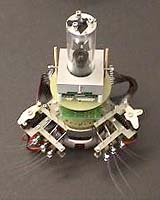
UPI Senior Business Correspondent Washington (UPI) Apr 17, 2006 Can robots do the dirty work most Americans don't want to do and meet some of the low-wage labor shortage facing the United States? Or better still, could robotic technology be part of the solution to the immigration conundrum that is facing the nation? For some companies, the answer is a perhaps maybe. For accomplishing basic tasks such as household cleaning and keeping an eye on the kids and the elderly, technology may indeed provide a partial answer to the many problems that come with domestic service, at least at first blush. From gadgets that will sweep and mop floors to robots that will look after people, hi-tech products may well help buyers circumvent the headache of trying to find affordable and reliable domestic help that do not require government papers or tax filings, not to mention sick days and time off. "We provide peace of mind," said Martin Spencer, chief executive of Atlanta-based GeckoSystems, which specializes in making domestic-use robots, most notably its Carebots. On sale for the past six years, Carebots have a built-in video camera with videoconferencing capabilities, in addition to having all the functions of a personal computer. "You can train it and customize it to look out for the kids and grandma," Spencer told United Press International. For instance, the four-foot machine can be programmed to follow a child around the house while the mother is at the office, and she will be able to see through the robot's eyes what exactly her offspring is up to. And if he's touching something he isn't suppose to, not only can the robot be taught to say "no," but the mother can boom her own voice out through the robot from her office desk. It can be trained too to tell the child to do homework, pick up after itself, eat dinner, and all the other things a parent might do at appropriate times -- and it can even learn to sing and tell jokes too. The single biggest potential for home robots, though, is in elderly care, Spencer argued. "This can keep grandma out of the nursing home," he said, pointing out that half of the nursing homes in Florida are juggling with lawsuits as they provide sub-par care, even as it costs several thousand dollars to keep them there. The problem with robots, though, is that they too aren't cheap. The price tag of a Carebot is $20,000, even though it does include a couple of days' training for the new owners so that they can make full use of their purchase. It is also probably not an easy tool to use for those who feel uncomfortable around computers and tech gadgets or otherwise don't see themselves in the category of technically advanced families. That's certainly not the case when it comes to the mopping and sweeping machine. The Scooba by iRobot is definitely affordable, even though it's far from cheap. The mopping machine costs $400, and its sister, Roomba, which vacuums the house, ranges from $150 to $300. Moreover, it's simple to use for even the most technologically disinclined. All Scooba needs is a capful of special cleaning solution specifically designed for use in the robot mixed with warm water put into its tank, and with the press of one button, it can be left on its own to prep, wash, scrub and dry a tile, linoleum or sealed hardwood floor. "It does what it's supposed to do very well," said Nancy Dussault, director of global marketing at iRobot. That it certainly does, but the problem is, it doesn't do anything more than that. So while the kitchen and bathroom floor may be spick and span, it's still up to humans to wipe down counters, do the dishes and throw out the rubbish. So while a machine might come in handy between days that the cleaning lady doesn't show up, it will never act as her replacement. And therein lies the problem with affordable robotic technology for households as it exists today. While knowledge from advance military defense capabilities may be used in developing the products, robots for the home are only able to accomplish basic, repetitive tasks. For those simple tasks, they are very good. But a seemingly menial task such as cleaning a house actually requires considerable dexterity and skill that is beyond a basic robot's ability. Meanwhile, if a machine is even slight programmable, the cost for the product becomes prohibitive to most people. "There really aren't that many products available in the market that work at home at a low cost right now," said Jeff Burnstein, vice president of marketing and public relations at the Robotic Industries Association based in Ann Arbor, Mich. "So when it comes to talking about the impact (of robots) on immigration ... it just isn't there yet," he added.
Source: United Press International Community Email This Article Comment On This Article Related Links - All about the robots on Earth and beyond!
 Robots Embedded At School In Quest To Bond With Humans
 Tokyo, (AFP) Apr 16, 2006
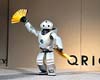
Playtime over, a toddler says nighty-night and spreads a blanket on the floor on top of his silver-colored friend. It is an everyday scene at one US nursery school, where robots are immersed among children to find out what it takes for machines and humans to develop long-term relationships. |
|
|

| The content herein, unless otherwise known to be public domain, are Copyright 1995-2006 - SpaceDaily.AFP and UPI Wire Stories are copyright Agence France-Presse and United Press International. ESA PortalReports are copyright European Space Agency. All NASA sourced material is public domain. Additionalcopyrights may apply in whole or part to other bona fide parties. Advertising does not imply endorsement,agreement or approval of any opinions, statements or information provided by SpaceDaily on any Web page published or hosted by SpaceDaily. Privacy Statement |