
 |
 |
 |
 |
 |
 |
 |
 |
 |

 |

Cambridge, Mass. (UPI) Jan 6, 2011 The Earth's ancient oceans became a toxic mix at one point that put the brakes on the evolution of early animals, a paper by U.S. researchers suggests. Scientists at Harvard University say they believe soon after complex animals made their first evolutionary steps forward, a combination of too little oxygen and too much sulfur in the globe's coastal waters led to the extinction of many developing species, ScienceNews.org reported Thursday. Marine creatures are extremely sensitive to their surroundings, suffocating when oxygen levels drop, and researchers say that's what happened shortly after the "Cambrian explosion" in which animals blossomed in biodiversity around 500 million years ago. The researchers studied rock samples of the proper age from Nevada, Utah, Missouri, Australia and Sweden to track changes such as sediment being buried on the ocean bottom, a process that alters chemistry in the waters above. The amount of carbon and sulfur in the rocks proves the world's oceans were low in oxygen and high in the sulfide form of sulfur, the researchers say. Today, a similar environment can be found in the oxygen-starved Black Sea, Harvard geochemist Benjamin Gill says. Although Cambrian oceans were apparently toxic, researchers say they don't know why. "What we're looking at is the aftermath of the crime scene," says Gill. "We don't have the cause for why the oceans suddenly went anoxic."
Share This Article With Planet Earth
Related Links Explore The Early Earth at TerraDaily.com

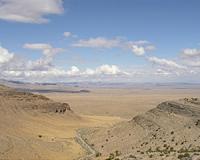 Widespread Ancient Ocean "Dead Zones" Challenged Early Life
Riverside CA (SPX) Jan 07, 2011 The oceans became oxygen-rich as they are today about 600 million years ago, during Earth's Late Ediacaran Period. Before that, most scientists believed until recently, the ancient oceans were relatively oxygen-poor for the preceding four billion years. Now biogeochemists at the University of California-Riverside (UCR) have found evidence that the oceans went back to being "anoxic," or oxy ... read more |
|
|
| The content herein, unless otherwise known to be public domain, are Copyright 1995-2010 - SpaceDaily. AFP and UPI Wire Stories are copyright Agence France-Presse and United Press International. ESA Portal Reports are copyright European Space Agency. All NASA sourced material is public domain. Additional copyrights may apply in whole or part to other bona fide parties. Advertising does not imply endorsement,agreement or approval of any opinions, statements or information provided by SpaceDaily on any Web page published or hosted by SpaceDaily. Privacy Statement |


 del.icio.us
 Digg
Digg Reddit
 YahooMyWeb
 Google
 Facebook


