|
 |
 |
 |
 |
 |
 |
 |
 |

 |
X-34 Fastrac Engine Tested
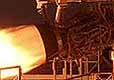
Huntsville - July 1, 1999 - The Fastrac rocket engine has achieved a major milestone in preparation for the first powered flight of NASA�s X-34 technology demonstrator. The engine was tested at full power for 155 seconds, the length of time the engine will be required to perform during an X-34 flight. Last month�s full-duration, hot-fire test occurred less than three years after engineers at NASA�s Marshall Space Flight Center in Huntsville, Ala., initiated the concept design of the engine - a much faster-than-usual design cycle. The test demonstrated endurance of Fastrac components working together as a unit for the duration of Fastrac�s requirement on an X-34 mission. Full-engine testing is conducted at NASA�s Stennis Space Center, Miss., where about 60 more Fastrac tests are planned during the next year. Fastrac is a new, 60,000-pound-thrust engine designed to boost small research payloads. Each Fastrac engine will initially cost approximately $1.2 million - about one-fifth of the cost of similar engines. Fastrac is claimed to be less expensive than similar engines because of an innovative design approach that uses commercial, off-the-shelf parts and fewer of them. Common manufacturing methods are used, so building the engine is relatively easy and not as labor-intensive as manufacturing typical rocket engines. A mixture of liquid oxygen and kerosene fuels the engine.
Email This Article Comment On This Article Related Links Space
 Satellite Launch To Boost DTH In India
 Calcutta, India (SPX) Dec 28, 2005
The successful launch Thursday of India's heaviest satellite from spaceport of Kourou in French Guyana may have boosted the country's space research efforts to yet another level, but it has also lifted the spirits of at least three Direct-To-Home televisions broadcasters, one of which has been waiting for years to launch its services in India. |
|
|

|
|
|
|
|
|
|
|
|
|
|
|
| The content herein, unless otherwise known to be public domain, are Copyright 1995-2006 - SpaceDaily.AFP and UPI Wire Stories are copyright Agence France-Presse and United Press International. ESA PortalReports are copyright European Space Agency. All NASA sourced material is public domain. Additionalcopyrights may apply in whole or part to other bona fide parties. Advertising does not imply endorsement,agreement or approval of any opinions, statements or information provided by SpaceDaily on any Web page published or hosted by SpaceDaily. Privacy Statement |