|
 |
 |
 |
 |
 |
 |
 |
 |

 |
Winging It In Deep Space
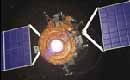
Pasadena - May 20, 2000 - There has not been time to design a brand new system to extract the needed information from the picture, but there is no need to -- that will be taken care of through the expertise of the on-board navigation system that performed so brilliantly during the primary mission. Engineers have invented new techniques for flying the spacecraft to account for these and other differences. This is an extremely difficult task, with an enormous number of complex and important engineering problems to solve, but the opportunity to bring technical knowledge from a variety of disciplines, creativity, and teamwork to this challenge is one of the great rewards of such work. The Deep Space 1 team chose to aim for the ambitious goal of completing the job in time to resume thrusting with the advanced ion propulsion system in July to propel the craft to an encounter with Comet Borrelly in September 2001. This has made the schedule extremely tight and the chances for success less certain. If the team had taken about two months longer to complete the task, we could be much more confident the new software would be up to the job, but then the opportunity to travel to the comet would be lost. So setting its sights high, the team is taking its best shot at the biggest prize. If it works, the resurrected probe will have a second chance for carrying humankind to a new destination in the solar system. And even if it does not work, the new methods developed along the way stand as more impressive accomplishments in the mission of Deep Space 1. To try to be ready for ion powered flight again in July, the team will begin radioing the new software to Deep Space 1 on May 30, a complex process in itself that will span about 8 days. It would be essentially impossible to transmit all this software to the spacecraft without the innovative technique the operations team devised for helping Deep Space 1 point its main antenna at Earth without the use of the star tracker. To begin running the software, the spacecraft's main computer, which is responsible for keeping the craft healthy and running smoothly, needs to be rebooted. After the software is on board, controllers will command the spacecraft through carefully designed steps to prepare it for that event, and then send the final command to reboot. It will take DS1 a few minutes to begin operating again, and then when it resumes transmitting signals to Earth, watchful controllers at JPL will be ready to verify that the new software is working correctly. Over a period of two days, DS1's engineers will reactivate systems turned off during the reboot. Then the next challenge begins. The new features of the software will be tested to determine whether the spacecraft can indeed hold a fixed orientation by itself, turn reliably from one direction to another, and provide a stable platform for using the ion propulsion system, all by using pictures of a star with its camera instead of signals from its star tracker. This log will be updated once the testing is underway. Deep Space 1 is now nearly twice as far from Earth as the Sun is and over 760 times as far as the moon. At this distance of almost 292 million kilometers, or over 181 million miles, radio signals, traveling at the universal limit of the speed of light, take about 32 and a half minutes to make the round trip.
Email This Article Comment On This Article Related Links Space
 Satellite Launch To Boost DTH In India
 Calcutta, India (SPX) Dec 28, 2005
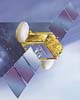
The successful launch Thursday of India's heaviest satellite from spaceport of Kourou in French Guyana may have boosted the country's space research efforts to yet another level, but it has also lifted the spirits of at least three Direct-To-Home televisions broadcasters, one of which has been waiting for years to launch its services in India. |
|
|

|
|
|
|
|
|
|
|
|
|
|
|
| The content herein, unless otherwise known to be public domain, are Copyright 1995-2006 - SpaceDaily.AFP and UPI Wire Stories are copyright Agence France-Presse and United Press International. ESA PortalReports are copyright European Space Agency. All NASA sourced material is public domain. Additionalcopyrights may apply in whole or part to other bona fide parties. Advertising does not imply endorsement,agreement or approval of any opinions, statements or information provided by SpaceDaily on any Web page published or hosted by SpaceDaily. Privacy Statement |