|
 |
 |
 |
 |
 |
 |
 |
 |

 |
Wild Relatives Sweeten Breeding Program
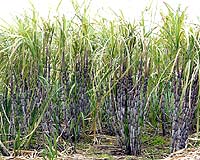
Canberra, Australia (SPX) Jun 08, 2007 Wild relatives of sugarcane hold genes that could be bred into commercial sugarcane varieties in Australia to help increase sugar production. Imported from China by the BSES-CSIRO Plant Industry Joint Venture for Variety Improvement, clones produced from crosses between sugarcane and three wild relatives of sugarcane are now available to Australian sugarcane breeding programs. This cooperation is supported by the Australian Centre for International Agricultural Research and further evaluation work is being done within the Cooperative Research Centre for Sugarcane Industry Innovation through Biotechnology (CRC SIIB). "We want to evaluate the yield potential and performance of progeny from crosses between these clones and the best parents from Australian breeding programs", says Dr Philip Jackson, key researcher in the Joint Venture that seeks to breed better sugarcane varieties for Australia. "We are especially interested in performance in dry environments and ability to re-shoot or 'ratoon'." Crossing started two weeks ago at Macknade experiment station in North Queensland and seedlings from the crosses will be grown out in the next few months. Commercial sugarcane varieties around the world today are based on a small number of clones from crosses between Saccharum spontaneum (a wild cane species) and Saccharum officiarum (the original sugarcane used in agriculture). From that point of view, sugarcane has a limited genetic base. "These new clones from China have a large range of genetic diversity never before used in commercial sugarcane breeding programs," Dr Jackson says. "We can now look for the best traits and genes of these clones and try and breed them into commercial sugarcane varieties to help the industry boost yields and tackle factors such as limited water." The collaboration with China allows the Australian sugarcane breeders to access the clones and opens up the opportunity to exchange more information and breeding material so both countries can develop the best sugarcane varieties for their unique situations. "Some of the clones could have traits related to high biomass yields and be especially suited for future energy production systems, or they may be better suited to growing on dryer and more marginal land compared with current sugarcane production systems," Dr Jackson says. "As part of the DNA marker research program in the CRC SIIB, we are also assessing whether DNA markers that flag the location of useful genes in the new clones can assist in future breeding efforts. "DNA markers help separate favourable and unfavourable genome components better than traditional breeding and may help to speed up the delivery of new varieties with improved genetics," he says. Email This Article
Related Links  Sydney, Australia (SPX) Jun 05, 2007
Broccoli, eggplant, cabbage and capsicum grown with compost made from recycled garden offcuts have produced equivalent yields to those cultivated by conventional farm practice, but without the subsequent build up of phosphorus. NSW Department of Primary Industries (DPI) scientists have found very high levels of phosphorus and low levels of organic carbon in vegetable growing soils, during a major research project designed to help Sydney Basin vegetable growers significantly improve soil quality and productivity. |
|
|

| The content herein, unless otherwise known to be public domain, are Copyright 1995-2006 - SpaceDaily.AFP and UPI Wire Stories are copyright Agence France-Presse and United Press International. ESA PortalReports are copyright European Space Agency. All NASA sourced material is public domain. Additionalcopyrights may apply in whole or part to other bona fide parties. Advertising does not imply endorsement,agreement or approval of any opinions, statements or information provided by SpaceDaily on any Web page published or hosted by SpaceDaily. Privacy Statement |