|
 |
 |
 |
 |
 |
 |
 |
 |

 |
Unmanned Aircraft Capabilities Expanding In War On Terrorism
Washington (SPX) Aug 17, 2005 Once used only for remote reconnaissance, unmanned aircraft technology has rapidly evolved in recent years. Such systems now feature strike capabilities and are being used for force-protection and signals-collection missions in Iraq and Afghanistan. Unmanned aerial systems "have helped reduce the complexity and time lag in the 'sensor-to-shooter chain' for acting on 'actionable intelligence,'" according to a document released earlier this month. The Unmanned Aircraft Systems Roadmap 2005-2030, released Aug. 4 with more than 200 pages, explains these diverse systems range from "micro air vehicles, weighing less than a pound, to massive aircraft weighing more than 40,000 (pounds), and vary in cost from a few thousand dollars to tens of millions." The roadmap, now in its third iteration, lays out technology goals for developing unmanned systems over the next 25 years, explained Dyke Weatherington, deputy director of DoD's Unmanned Aerial Vehicle Planning Task Force. Speaking to reporters at the Pentagon, Weatherington explained that even the name of the roadmap has changed from previous iterations. "Unmanned aerial vehicle," generally referred to as UAV, has been the most commonly accepted term for such aircraft. DoD planners have recently changed that terminology to "unmanned aircraft system." UAS better denotes that much more than just the vehicle is needed to make such systems useful to warfighters. "A UAV by itself doesn't do anything for anybody other than sit on the ramp and provide shade," Weatherington said. "I need an integrated capability to do the mission. ... That's a vehicle; that's sensor systems; that may be weapons; that's communication systems; that's command and control; that's trained operators. All those elements are critical to deliver the capability." Unmanned systems are particularly well-suited for "information, surveillance and reconnaissance" missions at the tactical level, Weatherington said. Specific useful capabilities of such systems include full-motion video and "persistence" - they can stay in an area observing a developing situation for extended lengths of time. He said "well-over" 1,000 small, unmanned systems are currently in use in Iraq and Afghanistan. The top technology goal in the roadmap is to develop the Joint Unmanned Combat Air System, to provide a key capability predominantly delivered by manned aircraft in operations today. "Primarily, for mobile, dynamic targets, the solution today is to send manned tactical aircraft in to find, (identify) and destroy those," Weatherington said. Manned aircrews aren't the ideal choice for these missions because they put aircrews at risk, he said. Smaller unmanned systems are "somewhat disposable," Weatherington said. "We don't intend to dispose of them. But ... if you need to put them in a situation to save a life, and you end up leaving the aircraft, it's not a significant loss." Community Email This Article Comment On This Article Related Links Unmanned Aerial Systems Roadmap SpaceDaily Search SpaceDaily Subscribe To SpaceDaily Express UAV News - Suppliers and Technology
 USAF UAV Battlelab Sponsors Demo Of Proxy Aviation's SkyForce
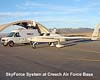 Germantown MD (SPX) Jan 11, 2006
Proxy Aviation Systems recently announced the United States Air Force (USAF) Unmanned Aerial Vehicle Battlelab (UAVB) sponsored and cooperated in a demonstration of SkyForce, Proxy Aviation's unmanned aircraft system. |
|
|

| The content herein, unless otherwise known to be public domain, are Copyright 1995-2006 - SpaceDaily.AFP and UPI Wire Stories are copyright Agence France-Presse and United Press International. ESA PortalReports are copyright European Space Agency. All NASA sourced material is public domain. Additionalcopyrights may apply in whole or part to other bona fide parties. Advertising does not imply endorsement,agreement or approval of any opinions, statements or information provided by SpaceDaily on any Web page published or hosted by SpaceDaily. Privacy Statement |