|
 |
 |
 |
 |
 |
 |
 |
 |

 |
UT Southwestern Researchers Identify Hundreds Of Genes Controlling Female Fertility
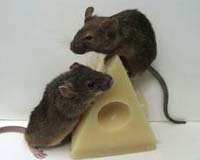
Dallas TX (SPX) Sep 24, 2007 Researchers at UT Southwestern Medical Center have found nearly 350 genes related to female fertility. Their research may open the door to much wider study in the poorly understood field of infertility. "This study gives us a way to begin to understand the causes of female infertility," said Dr. Diego Castrillon, assistant professor of pathology and senior author of a study appearing in the September issue of the journal Genetics. "It gives us a much more complete list of candidate genes to explore. Before, we didn't even know where to look." The study was done in mice, "but at the molecular level, ovarian biology is very similar in mice and humans," Dr. Castrillon said. These discoveries might lead the way to eventually allowing clinicians to test whether an infertile woman has problems with a specific gene, allowing for improved diagnostic tests and tailored therapy in the future, said Dr. Castrillon, a specialist in the diagnosis of infertility and other diseases of women. About 13 percent of women suffer from infertility, with the most common cause being dysfunction of the ovary. Researchers suspected genetic links in many cases, Dr. Castrillon said. In mammals, the ovaries go through a developmental stage after birth in which egg cells become nestled in dormant nests called primordial follicles. Later in development, the follicles become activated by a process that researchers don't fully understand, and at puberty, egg cells begin being released for fertilization. The researchers focused on a gene called Foxo3, which controls follicle activation. Normally, follicles are activated on a staggered schedule, so an ovary contains follicles at many different stages of development. In female mice genetically engineered to lack Foxo3, the follicles are normal at birth, but later become activated all at the same time. This coordinated maturation meant that the genes controlling follicle growth were all turned on at the same time, making it easier to detect these genes. The researchers employed a method known as expression profiling to identify the active genes. They found 348 genes that were active in ovaries in the mice lacking Foxo3, but not in other tissues, indicating that they could function specifically in follicle growth. Some of the genes the researchers found were already known to be involved in infertility, which helped validate the experimental method. Most, however, were previously unknown, Dr. Castrillon said. The researchers also randomly selected a small number of genes from the 348 and looked for them in human ovaries. Those specific genes proved to be active in early development of the human ovary. Future work will focus on finding out how these genes communicate with each other to control follicle development, and study their contribution to female infertility, Dr. Castrillon said. The work was supported by the National Institutes of Health. Community Email This Article Comment On This Article Related Links UT Southwestern Medical Center Darwin Today At TerraDaily.com
 UT Researcher Sheds New Light On Hybrid Animals
 Knoxville TN (SPX) Sep 20, 2007
What began more than 50 years ago as a way to improve fishing bait in California has led a University of Tennessee researcher to a significant finding about how animal species interact and that raises important questions about conservation. In the middle of the 20th century, local fishermen who relied on baby salamanders as bait introduced a new species of salamander to California water bodies. These Barred Tiger salamanders came into contact with the native California Tiger salamanders, and over time the two species began to mate. |
|
|

| The content herein, unless otherwise known to be public domain, are Copyright 1995-2007 - SpaceDaily.AFP and UPI Wire Stories are copyright Agence France-Presse and United Press International. ESA Portal Reports are copyright European Space Agency. All NASA sourced material is public domain. Additional copyrights may apply in whole or part to other bona fide parties. Advertising does not imply endorsement,agreement or approval of any opinions, statements or information provided by SpaceDaily on any Web page published or hosted by SpaceDaily. Privacy Statement |