|
 |
 |
 |
 |
 |
 |
 |
 |

 |
US still confident of missile shield deal with Poland
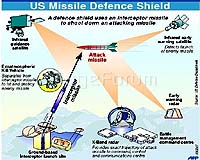
Washington (AFP) Jan 7, 2008 The United States said Monday it remains confident it will be able to strike a deal to install a missile shield in NATO and EU member Poland, despite misgivings from Warsaw. State Department spokesman Sean McCormack said the United States would address Polish concerns over US plans to station a battery of interceptor missiles in Poland and an associated radar in the Czech Republic by 2012. "We're still confident that we're going to be able to reach an agreement," McCormack told reporters. "This is in both of our interests. It's in the interests of Poland. It's in the interest of the United States. It's in the interest of other European countries," he added. McCormack said he was aware of concerns echoed in a news article by Polish Foreign Minister Radoslaw Sikorski. "I saw the comments from the Polish foreign minister, and we are going to negotiate and talk about this issue in good faith to address all of the government of Poland's concerns," he added. "And that's a process that is on-going now as evidenced by the fact that you have the defense minister (Bogdan Klich), who's going to be here later this month," McCormack said. While the United States insists the system is designed exclusively to ward off potential attacks by so-called "rogue" states, notably Iran, Russia has deemed it a threat to its national security. Warsaw is weighing the potential costs and benefits of accepting the US proposal. Sikorski has also expressed concern Washington could abandon the project after the November US presidential election. Sikorski invited Russian officials to discuss the issue in order for Warsaw to "better understand" Moscow's objections to the missile shield plans. Sikorski has, however, stipulated the onus is on Washington to allay Russia's fears regarding the missile shield project. He added: "We don't feel threatened by Iran." When asked if such remarks meant Iran was much less interested in the shield than Washington, McCormack replied: "It's designed to protect against future threats, as well as from current threats from Iran. "You don't know what you don't know about Iranian missile capabilities, but certainly they are working toward long-range missile capability. We all know that," he said. "We've seen the tests. The Iranian government has trumpeted the fact that they are working on that," he added. Community Email This Article Comment On This Article Related Links Learn about missile defense at SpaceWar.com Learn about nuclear weapons doctrine and defense at SpaceWar.com All about missiles at SpaceWar.com Learn about the Superpowers of the 21st Century at SpaceWar.com
 Global Ballistic Missile Defense Part Three
 Washington (UPI) Jan 4, 2008
 One would expect South Korea to be a "hare" on ballistic missile defense, given the scale of the immediate threat it faces from North Korea, right across the Demilitarized Zone, the most heavily and densely armed border in the world. However, Seoul ended 2007 with significant long-term BMD programs in place, but projecting an extremely relaxed "tortoise" timetable for them. The reasons for this at-first surprising complacency are deeply rooted in South Korea's politics, history and geographical circumstances. |
|
|

| The content herein, unless otherwise known to be public domain, are Copyright 1995-2007 - SpaceDaily.AFP and UPI Wire Stories are copyright Agence France-Presse and United Press International. ESA Portal Reports are copyright European Space Agency. All NASA sourced material is public domain. Additional copyrights may apply in whole or part to other bona fide parties. Advertising does not imply endorsement,agreement or approval of any opinions, statements or information provided by SpaceDaily on any Web page published or hosted by SpaceDaily. Privacy Statement |