
 |
 |
 |
 |
 |
 |
 |
 |
 |

 |
US scientists scrap major AIDS vaccine test
Washington (AFP) July 18, 2008 US scientists have scrapped plans for a large trial of a HIV vaccine due to concerns about its effectiveness, the government's medical research agency said. The decision on the government-developed vaccine comes less than a year after a trial for a similar vaccine from the pharmaceutical company Merck failed -- marking another setback in the decades-long struggle to develop a successful vaccine to fight the scourge of AIDS. The National Institute of Allergy and Infectious Diseases (NIAID), part of the government's National Institutes of Health, said after consulting scientists and advocacy groups it "has determined that it will not conduct the HIV vaccine study known as PAVE 100." "However, NIAID believes the vaccine developed by its Vaccine Research Center (VRC) is scientifically intriguing and sufficiently different from previously tested HIV vaccines to consider testing it in a smaller, more focused clinical study," the agency said in a statement issued on Thursday. The smaller-scale study would examine if the vaccine regimen lowers the amount of HIV in the blood of vaccinated individuals, the agency said. The trial, which was to involve 8,500 volunteers in the United States, South America, the Caribbean and Africa, had been viewed as a test of a promising vaccine that uses virus strains from around the world to prompt immunity. The failure of Merck's vaccine influenced the decision to cancel the planned trial of the government's PAVE vaccine, US media reported on Friday. The Merck vaccine in tests failed to prevent HIV infection or reduce the amount of HIV in the blood of patients, the government agency said. Results also indicated that it may have even increased the risk of infection for some patients. The official who canceled the PAVE trial, Doctor Anthony Fauci, director of the NIAID, said a large trial was not justified until fundamental questions could be answered about how the vaccine operates. "Show me that the vaccine works by lowering the amount of HIV in the blood," Fauci was quoted as saying by the New York Times. "Then we will move to a larger trial that will document the link with a particular immune response," he said. Until then, "doing a large trial is not justified." The agency said it would continue to strive to find an AIDS vaccine, an effort that began more than 20 years ago. "An HIV vaccine continues to be our best hope for ending the HIV pandemic," it said. "NIAID is committed to supporting the basic research and vaccine discovery needed to design promising vaccine candidates and testing those candidates when appropriate." Community Email This Article Comment On This Article Share This Article With Planet Earth
Related Links Epidemics on Earth - Bird Flu, HIV/AIDS, Ebola
 The Way To A Virus' Heart Is Through Its Enzymes
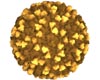 London, UK (SPX) Jul 15, 2008
The arrival of bluetongue virus (BTV) in the UK last year posed a major threat to the economy and the increasing temperatures of our changing climate mean it is here to stay. If we are to fight this disease, which has had a major impact on farming already, we must discover how it works. |
|
|

| The content herein, unless otherwise known to be public domain, are Copyright 1995-2007 - SpaceDaily.AFP and UPI Wire Stories are copyright Agence France-Presse and United Press International. ESA Portal Reports are copyright European Space Agency. All NASA sourced material is public domain. Additional copyrights may apply in whole or part to other bona fide parties. Advertising does not imply endorsement,agreement or approval of any opinions, statements or information provided by SpaceDaily on any Web page published or hosted by SpaceDaily. Privacy Statement |
 del.icio.us
 Digg
Digg Reddit
 YahooMyWeb
 Google
 Facebook