|
 |
 |
 |
 |
 |
 |
 |
 |

 |
US military investigates stealth bomber crash
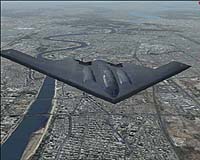
Canberra (AFP) Feb 23, 2008 The US military was investigating on Saturday after a B-2 stealth bomber crashed on take-off from the Pacific island of Guam, the first such incident involving the futuristic craft. Both pilots on board ejected safely as the 1.2-billion-dollar radar-evading plane, with its distinctive triangular shape, went down at Andersen airbase on the remote island, the US air force said. "Two pilots from the 509th Bomb Wing were on board and ejected. They have been evaluated by medical authorities and are in good condition," it said. "Emergency responders are on scene. A board of officers will investigate the accident," said the headquarters of the US air force in the Pacific. It was the second US air force crash this week after two F-15C jets collided during training over the Gulf of Mexico on Wednesday, killing a fighter pilot. Crowds gathered at the crash site after the bomber, one of just 21 in the air force inventory, went down at about 10:45 am (0045 GMT). A thick plume of smoke rose over the airbase and officials closed one of its two runways, diverting planes to Guam International Airport, the Pacific Daily News website said. "Everybody was on their cellphones and the first thing everyone wanted to know was did the pilots make it out in time," said an eye-witness quoted by the website. Pentagon spokesman Geoff Morrell, here with visiting US Defence Secretary Robert Gates, confirmed the crash but did not give further details. "We are grateful for the safety of the pilots," said Mike Cruz, acting governor of the US territory. "The Air Force and Guam have a long-standing relationship and we help each other in this community we share, especially during times like these." The long-range bomber was visiting from Whiteman Air Force Base in Missouri. Operated exclusively by the US, the B-2 has never crashed since first seeing combat in the air war over Kosovo in 1999. The 172-foot (52-metre) wide stealth bomber, which can carry nuclear as well as conventional weapons, has also been used in US campaigns over Iraq and Afghanistan. It emits minimal exhaust, noise and heat, making it hard to detect by radar or infra-red. Guam, in the northwest Pacific, and neighbouring US territories including the Northern Mariana Islands are considered by Washington as strategic locations in the Asia-Pacific region. Guam, population 170,000, is home to one of the largest US military naval bases in the region and 8,000 marines will soon be relocated there from Japan. The US and Japan are spending 15 billion dollars on the relocation of the marines from Japan, which is expected to further boost Washington's military strength in the Asia-Pacific. burs/th/msl Community Email This Article Comment On This Article Related Links The latest in Military Technology for the 21st century at SpaceWar.com
 DRS Tech Gets Contract To Supply Marine Corps With Rugged Tablet Computers
 Parsippany NJ (SPX) Jul 10, 2007
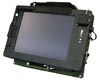
DRS Technologies has received a $5 million award as part of a previous contract to provide military rugged tablet (MRT) computers and peripheral equipment for the U.S. Marine Corps' Target Location Designation Handoff System (TLDHS) program. DRS received the order from Stauder Technologies in St. Peters, Missouri. For this contract the company's DRS Tactical Systems business unit in Melbourne, Florida, will produce hundreds of the handheld MRT computers and peripheral equipment. |
|
|

| The content herein, unless otherwise known to be public domain, are Copyright 1995-2007 - SpaceDaily.AFP and UPI Wire Stories are copyright Agence France-Presse and United Press International. ESA Portal Reports are copyright European Space Agency. All NASA sourced material is public domain. Additional copyrights may apply in whole or part to other bona fide parties. Advertising does not imply endorsement,agreement or approval of any opinions, statements or information provided by SpaceDaily on any Web page published or hosted by SpaceDaily. Privacy Statement |