|
 |
 |
 |
 |
 |
 |
 |
 |

 |
US concerned by Russian sale of air defense systems to Iran
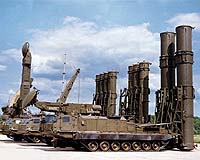
Crawford, Texas (AFP) Dec 26, 2007 The White House expressed concern Wednesday over Iran's announcement that Russia would supply S-300 air missile defense systems to the Islamic republic. "We have ongoing concerns about the prospective sale of such weapons to Iran and other countries of concern," Scott Stanzel, a White House spokesman, said from Crawford, Texas, where President George W. Bush was spending the yearend holiday on his ranch. Iranian Defense Minister Mostafa Mohammad Najjar announced Wednesday that Russia would deliver the system, but said the date for the delivery would be unveiled later. Moscow has not confirmed the sale. The announcement came as Washington is seeking to impose new United Nations sanctions on Iran over its refusal to halt its nuclear program, which the United States fears could be used to build an atomic bomb. Earlier this year Moscow frustrated Washington by delivering to Tehran 29 TOR-M1 air defense missile systems, in a deal estimated to be worth 700 million dollars. Iranian state media touted the S-300 as an even more sophisticated system than the TOR-M1, saying it could hit incoming enemy targets at a greater altitude. Iran said in January it had successfully test fired the TOR-M1. The United States had urged Russia to cancel that sale, saying it was a mistake when the UN Security Council had imposed sanctions on Iran's ballistic missile industry as part of measures against its nuclear drive. Community Email This Article Comment On This Article Related Links The Military Industrial Complex at SpaceWar.com Learn about the Superpowers of the 21st Century at SpaceWar.com
 Thompson Files: A good year for Bush
 Arlington, Va. (UPI) Dec 27, 2007
 When Operation Desert Storm ended with a crushing defeat of Iraqi forces in early 1991, many pundits opined that U.S. President George Herbert Walker Bush was assured of re-election. Military success had made the president so popular that it was hard to see what could derail his re-election bid. But Bush's popularity declined rapidly after Desert Storm, and in 1992 he lost the White House to Bill Clinton in an election that had little to do with national security. |
|
|

| The content herein, unless otherwise known to be public domain, are Copyright 1995-2007 - SpaceDaily.AFP and UPI Wire Stories are copyright Agence France-Presse and United Press International. ESA Portal Reports are copyright European Space Agency. All NASA sourced material is public domain. Additional copyrights may apply in whole or part to other bona fide parties. Advertising does not imply endorsement,agreement or approval of any opinions, statements or information provided by SpaceDaily on any Web page published or hosted by SpaceDaily. Privacy Statement |