|
 |
 |
 |
 |
 |
 |
 |
 |

 |
US Ready To Discuss Missile Shield Objections
Washington (AFP) July 6, 2000 The United States stressed Thursday that its proposed missile shield would not nullify China's nuclear arsenal, following the latest stinging critique of the plan by Chinese Premier Zhu Rongji. State Department spokesman Richard Boucher said the United States was committed to discussing the proposed system with China, including during talks on security issues due to start Friday in Beijing. "We've been quite (up) front about the fact that this consideration is not directed at any existing arsenal, like the Chinese or the Russians," said Boucher. "We have been quite clear that we're prepared to continue to discuss and consult with the Chinese government on these issues." Zhu said on Thursday in Rome that China was "categorically opposed" to a US shield against ballistic missiles. Such a scheme would "aim to absorb Taiwan into the American sphere of protection, which we consider a gross interference into China's domestic affairs," he said during an official visit to Italy. China considers Taiwan a renegade province and is harshly critical of US arms sales to the island. US Undersecretary of State for Security and Arms Control John Holum is heading a large team from Washington at security talks in Beijing on Friday and Saturday. It will be the first time the two sides have sat down for arms control and proliferation consultations since NATO bombed the Chinese embassy in Belgrade during the Kosovo campaign in May 1999, sending Sino-US relations into crisis. US scientists are meanwhile preparing for Friday's crucial missile intercept test which will determine whether the Pentagon certifies the National Missile Defense system as ready for deployment by 2005. President Clinton said last week that he had not yet made a final decision whether to go ahead with the system. Russia, China and others have warned that deployment, which would mean US withdrawal from the 1972 Anti-Ballistic Missile Treaty, would trigger a destabilizing arms race. The United States says the shield would be limited to protecting its territory from small-scale attacks from nations like North Korea or terrorists.
|
Seoul (AFP) July 7, 2000 - South Korea and the United States are close to agreeing a deal which will allow the South to increase the range of its missiles, officials said Friday. US ambassador to Seoul Stephen Bosworth said in an interview with the Yonhap news agency the two sides were set to agree to South Korea extending its missile range under the Missile Control Technology Regime (MCTR). He said South Korea and the United States were in the "final stages" of negotiations over the deal and were due to hold a last round of talks soon. South Korea's existing missile range is limited to 180 kilometres (112.5 miles) under a bilateral agreement with the United States. The MCTR, an international agreement with 32 member countries, allows for development of missiles up to a maximum range of 300 km (187.5 miles) capable of carrying a 500 kilogram payload. "We are in the final stages of successful negotiations which would have important benefits in enabling South Korea to join the MTCR," Bosworth said. Asked if joining the MTCR would enable South Korea to extend the range of its missiles, Bosworth said: "Longer range than it currently has under the bilateral agreement (with the United States). It would be able to go out further." A senior official in South Korea's Foreign Ministry confirmed the negotiations. Shin Min-Ho, deputy director of the ministry's North American division, said attempts to develop South Korean rockets had been hampered by non-membership of the MTCR. "We are trying to develop our rocket system. But if we are not members of MTCR we are not able to buy parts," Shin said, playing down suggestions any extension could threaten its neighbours. "We don't think it will. It's a very short range...we don't think it will be a threat," he said. "North Korea might consider that this extension of our capacity is contrary to present co-operation but by joining the MTCR we are showing total transparency of our programme. The MTCR is very clear," he said. Park said there remained "three or four" points which needed to be resolved before South Korea's membership could be confirmed. Robert Einhorn, US assistant secretary of state for arms non-proliferation would visit Seoul on July 14 for informal talks, Shin said, adding South Korea hoped to confirm MTCR membership by the end of this year. The negotiations follow last month's Pyongyang summit, which was regarded as a sign that the Stalinist nation wants to reconcile with its former Korean War foes. The United States eased economic sanctions against the North following the summit. Shortly afterwards, North Korea announced that it would stick to a moratorium on missile tests, agreed in 1994. The apparent thaw in relations has raised questions over the United States' continued heavy military presence in South Korea, where some 37,000 personnel are stationed. But Bosworth said forward deployment of troops would continue to be a key plank of US security policy in the region. "We are here because people and the government of South Korea feel threatened. "As long as that sense of threat continues, we will remain here as we are now," he said, hailing last month's summit as "a very important strategic change" on the part of North Korea. North and South Korea have remained technically at war since the end of their bitter 1950-53 conflict. No armistice has ever been signed between the two sides.
|
 Memory Foam Mattress Review |
Newsletters :: SpaceDaily :: SpaceWar :: TerraDaily :: Energy Daily XML Feeds :: Space News :: Earth News :: War News :: Solar Energy News |
 Satellite Launch To Boost DTH In India
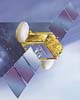 Calcutta, India (SPX) Dec 28, 2005
|
|

|
|
|
|
|
|
|
|
|
|
|
|
| The content herein, unless otherwise known to be public domain, are Copyright 1995-2006 - SpaceDaily.AFP and UPI Wire Stories are copyright Agence France-Presse and United Press International. ESA PortalReports are copyright European Space Agency. All NASA sourced material is public domain. Additionalcopyrights may apply in whole or part to other bona fide parties. Advertising does not imply endorsement,agreement or approval of any opinions, statements or information provided by SpaceDaily on any Web page published or hosted by SpaceDaily. Privacy Statement |