|
 |
 |
 |
 |
 |
 |
 |
 |

 |
US Develops Lethal New Viruses
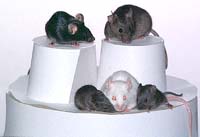
London - Oct 30, 2003 The British science journal New Scientist reports that a scientist funded by the US government has deliberately created an extremely deadly form of mousepox, a relative of the smallpox virus, through genetic engineering. The new virus kills all mice even if they have been given antiviral drugs as well as a vaccine that would normally protect them. According to New Scientist the work has not stopped there. "The cowpox virus, which infects a range of animals including humans, has been genetically altered in a similar way," wrote New Scientist, adding "The new virus, which is about to be tested on animals, should be lethal only to mice, Mark Buller of the University of St Louis told New Scientist. He says his work is necessary to explore what bioterrorists might do." But the research brings closer the prospect of pox viruses that cause only mild infections in humans being turned into diseases lethal even to people who have been vaccinated. And vaccines are currently our main defence against smallpox and its relatives, such as the monkeypox that reached the US this year. Some researchers think the latest research is risky and unnecessary. "I have great concern about doing this in a pox virus that can cross species," said Ian Ramshaw of the Australian National University in Canberra on being told of Buller's work. Ramshaw was a member of the team that accidentally discovered how to make mousepox more deadly (New Scientist, 13 January 2001, p 4). But the modified mousepox his team created was not as deadly as Buller's. Since then, Ramshaw told New Scientist, his team has also created more deadly forms of mousepox, and has used the same method to engineer a more deadly rabbitpox virus. But this research revealed that the modified pox viruses are not contagious, he says. That is good news in the sense that these viruses could not cause ecological havoc by wiping out mouse or rabbit populations around the world if they escaped from a lab. However, this discovery also means some bioterrorists might be more tempted to use the same trick to modify a pox virus that infects humans. Such a disease, like anthrax, would infect only those directly exposed to it. It would not spread around the world and rebound on the attackers. But there is no guarantee that other pox viruses modified in a similar way would also be non-contagious. Ramshaw's team made its initial discovery while developing contraceptive vaccines for sterilising mice and rabbits without killing them.
This article in full will appear in the November 1 issue of New Scientist Community Email This Article Comment On This Article Related Links SpaceDaily Search SpaceDaily Subscribe To SpaceDaily Express The Long War - Doctrine and Application
 Team Of ORNL Agents Working To Keep People Safe
 Oak Ridge TN (SPX) Jun 17, 2004
Thousands of special agents created at the Department of Energy's Oak Ridge National Laboratory are on missions 24 hours a day as they work to uncover threats to national security. These agents, which are actually intelligent software programs, scan the Internet, satellite images, hundreds of newspapers and electronic databases worldwide as they search for anything that even hints at a plot. |
|
|

| The content herein, unless otherwise known to be public domain, are Copyright 1995-2006 - SpaceDaily.AFP and UPI Wire Stories are copyright Agence France-Presse and United Press International. ESA PortalReports are copyright European Space Agency. All NASA sourced material is public domain. Additionalcopyrights may apply in whole or part to other bona fide parties. Advertising does not imply endorsement,agreement or approval of any opinions, statements or information provided by SpaceDaily on any Web page published or hosted by SpaceDaily. Privacy Statement |