|
 |
 |
 |
 |
 |
 |
 |
 |

 |
US Cracks Europe GPS Satellite Codes
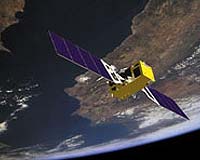
Brussels (UPI) Jul 11, 2006 U.S. scientists have reportedly cracked the European Union's secret satellite navigation codes. The codes, to be used by the EU's Galileo satellite system, casts doubt the $4.2 billion project will pay for itself through commercial fees, The London Telegraph reported Tuesday. Cornell University Professor Mark Psiaki said he and colleagues cracked the coded data being beamed to Earth by a prototype orbiting satellite. That, The Telegraph said, is potentially devastating for the EU, which wants to charge high-tech firms license fees to access that data, before they can make and sell compatible navigation devices to the public. Galileo is to be a European rival to the United States' military-controlled GPS system, which supplies signals without charge. Galileo's designers, however, say it will be more accurate than GPS. The European Commission said Monday Cornell's success in cracking codes for the prototype is irrelevant, since the final Galileo codes will be different. Galileo, due to be operational by 2010, is a joint venture of the European Commission, the European Space Agency and private investors, including an arm of the Chinese government.
Source: United Press International Community Email This Article Comment On This Article Related Links GPS Applications, Technology and Suppliers GPS Applications, Technology and Suppliers
 Difficult Road Ahead For Russian Space Navigation
 Moscow, Russia (RIA) Jul 13, 2006
The Russian satellite navigation system, which, as the name suggests, monitors ship and air traffic, is itself in need of effective state monitoring. |
|
|

| The content herein, unless otherwise known to be public domain, are Copyright 1995-2006 - SpaceDaily.AFP and UPI Wire Stories are copyright Agence France-Presse and United Press International. ESA PortalReports are copyright European Space Agency. All NASA sourced material is public domain. Additionalcopyrights may apply in whole or part to other bona fide parties. Advertising does not imply endorsement,agreement or approval of any opinions, statements or information provided by SpaceDaily on any Web page published or hosted by SpaceDaily. Privacy Statement |