|
 |
 |
 |
 |
 |
 |
 |
 |

 |
US Crackdown On Bioterror Backfiring
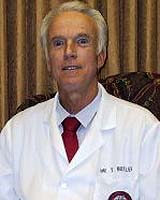
London - Nov 10, 2003 Last week, a respected biologist was led into a Texas courtroom. He faces no fewer than 68 charges and could end up in jail for the rest of his life. Has the FBI finally caught the anthrax attacker? No. Thomas Butler merely reported that 30 vials of plague bacteria had gone missing from his laboratory at Texas Tech University in Lubbock, reports British science weekly New Scientist. Many of Butler's colleagues believe the justice authorities are making an example of him as part of a wider effort to ensure that scientists take more care with material terrorists might exploit. Whatever the outcome of the case (see right), that effort is having repercussions that go far beyond the fate of one scientist. New Scientist has contacted more than 20 prominent figures in the US working in bioterror-related fields. Some refused to talk, and most who did did not want to be named. Their comments paint a disturbing picture. Some scientists, for instance, are refusing to work on projects involving agents that could be exploited as bioweapons, even though the US government is providing massive funding to boost such research. Others are considering abandoning existing work. Irreplaceable collections of microbes essential for managing and tracing outbreaks, bioterrorist or natural, are being destroyed simply because labs cannot comply with the new rules. The climate of fear created by the Butler case is even threatening the US's ability to detect bioterrorist activity. New Scientist has been told that labs in one state are no longer reporting routine incidents of animals poisoned with ricin, a deadly toxin found in castor beans, for fear of federal investigation. And if any terrorist ever does make off with dangerous bacteria, it will be a brave scientist who tells the FBI. As one put it: "I don't want to end up in a cell with Tom Butler." In a letter sent to the US attorney-general John Ashcroft in September, Stanley Falkow, a respected researcher at Stanford University in California, goes further: "Trying to meet the unwarranted burden of what the government considers 'biosafety' is simply not coincident with the practice of sound, creative scientific research." It is now two years since someone killed five people and created widespread disruption by posting envelopes of anthrax around the US. Coming just weeks after 9/11, the attacks shone a glaring spotlight on the risks of disease research. The authorities decided far tighter control was needed over biologists withaccess to dangerous pathogens. Their main response was last year's Bioterrorism Preparedness and Response Act, which from February imposed tight controls on "select agents", a list of 82 viruses, bacteria and toxins that could be used as weapons. The list includes the agents responsible for many significant diseases that affect people, livestock or plants, including foot and mouth disease and the BSE prion that causes mad cow disease. Even botulinum toxin is on the list, though the medical version, Botox, is exempt from the regulations. People working with select agents now have to register with the government, put their fingerprints on record, get security clearances, and have their labs inspected. Extensive control shave been placed on the movement of microbes and researchers, and all samples of select agents must be strictly accounted for or destroyed. There were controls on transporting some microbes before, but now possessing them is also regulated, and non-compliance is a crime. The scientific community does support tighter controls, says Ron Atlas, former president of the American Society for Microbiology (ASM). "Common sense as well as government regulations dictate that the days of carrying vials of dangerous pathogens in our pockets are gone, as are those of leaving cultures of anthrax in open laboratories," he says."As scientists we must honour a pact with the public to protect public health and defend against bioterrorism." The ASM, together with leading journals such as Nature and Science, last year announced a voluntary self-censorship code that requires crucial details that could be exploited by bioterrorists to be removed from scientific papers. But the regulations the US government has brought in, and the way they are being implemented, are driving some scientists to despair. For example, the Centers for Disease Control in Atlanta must now give permission to work with human pathogens, while the US Department of Agriculture manages livestock diseases. This ought to allow diseases such as anthrax that affect both people and animals to be dealt with by either agency. But in practice, some say, one agency will tell researchers they do not have the right paperwork, even if the other gave them clearance. Other rules are simply badly thought out or inconsistent. One part of the regulations states that clinical labs that grow new cultures of select agents must destroy them within seven days, one researcher complains. But another part requires labs to get permission before destroying any cultures- and this takes more than seven days. Such problems leave scientists feeling that compliance is simply impossible. "Every single lab involved in select agents has violated the regulations somehow," says one. "The FBI can come in and find you out of compliance whenever it chooses." The implications for government control of what scientists can do or say is, in the words of one, "McCarthy-esque". Even when the rules are clear, complying with them can be prohibitively expensive. This article appears in full in the November 8 edition of New Scientist. CommunityEmail This Article Comment On This Article Related Links SpaceDaily Search SpaceDaily Subscribe To SpaceDaily Express The Long War - Doctrine and Application
 Team Of ORNL Agents Working To Keep People Safe
 Oak Ridge TN (SPX) Jun 17, 2004
Thousands of special agents created at the Department of Energy's Oak Ridge National Laboratory are on missions 24 hours a day as they work to uncover threats to national security. These agents, which are actually intelligent software programs, scan the Internet, satellite images, hundreds of newspapers and electronic databases worldwide as they search for anything that even hints at a plot. |
|
|

| The content herein, unless otherwise known to be public domain, are Copyright 1995-2006 - SpaceDaily.AFP and UPI Wire Stories are copyright Agence France-Presse and United Press International. ESA PortalReports are copyright European Space Agency. All NASA sourced material is public domain. Additionalcopyrights may apply in whole or part to other bona fide parties. Advertising does not imply endorsement,agreement or approval of any opinions, statements or information provided by SpaceDaily on any Web page published or hosted by SpaceDaily. Privacy Statement |