|
 |
 |
 |
 |
 |
 |
 |
 |

 |
US Army Awards Contract To Raytheon For Excalibur Production
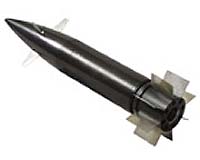
Tucson AZ (SPX) Jun 22, 2006 The U.S. Army awarded Raytheon Company a $42.7 million contract for fiscal year 2006 production of tactical Excalibur projectiles and related test articles and services. Excalibur - a cooperative effort between Raytheon Missile Systems and BAE Systems Bofors of Sweden - is an artillery projectile that uses satellite guidance to provide precision accuracy at extended ranges for all current and future 155 mm howitzers. Raytheon will provide Excalibur projectiles, testing, manufacturing tooling, test and inspection equipment, projectile shipping and storage containers and training support necessary to sustain early fielding (EF). Initial early fielding is to be provided by the fiscal year 2005 production contract. The fiscal year 2006 contract will provide 335 tactical Excalibur rounds in addition to other services and test articles. "The U.S. Army is anxious to get this capability to the warfighter; this award is essential to sustain the anticipated EF program," said Col. John Tanzi, the Army's TRADOC (U.S. Army Training and Doctrine Command) system manager for Cannons, Fort Sill, Okla. This contract follows months of testing during which Excalibur demonstrated an accuracy of 4.5 meters (about 14.8 feet) in 12 successful guided flights. The tests successfully demonstrated the three fuzing modes (delay, height-of-burst, and point detonate) and warhead lethality. Lethality has been proven against wheeled and tracked lightly armored military systems, simulated personnel targets and a steel reinforced concrete structure. Against the concrete structure, Excalibur successfully penetrated the roof, detonating inside the structure and causing impressive damage to the simulated target array. Raytheon Missile Systems is the leading developer of guided projectiles, including Excalibur and the Navy's Extended-Range Guided Munition (ERGM). These projectiles will provide U.S. forces with precision munitions capability that is required on the battlefield. Both systems will provide enhanced lethality and accuracy, while minimizing collateral damage in the complex urban environment. Excalibur and ERGM leverage many common components and supplier partnerships and apply industry best practices to produce two low-cost and reliable weapon systems that will meet or exceed all customer-defined requirements. Community Email This Article Comment On This Article Related Links Raytheon The latest in Military Technology for the 21st century at SpaceWar.com
 Precision-Guided Munitions Play Key Role
 Eglin AAF FL (AFNS) Jun 21, 2006
The two 500-pound bombs that took out terrorist leader Abu Musab Al Zarqawi June 7 have a long history of development and improvements at the Air Armament Center here. The munitions used were a GBU-38 - a bomb with a tail kit better known as a Joint Direct Attack Munition, which uses inertial navigation and a global positioning system to help ensure the bomb hits the target, and the GBU-12 - a bomb that is laser guided to the target. |
|
|

| The content herein, unless otherwise known to be public domain, are Copyright 1995-2006 - SpaceDaily.AFP and UPI Wire Stories are copyright Agence France-Presse and United Press International. ESA PortalReports are copyright European Space Agency. All NASA sourced material is public domain. Additionalcopyrights may apply in whole or part to other bona fide parties. Advertising does not imply endorsement,agreement or approval of any opinions, statements or information provided by SpaceDaily on any Web page published or hosted by SpaceDaily. Privacy Statement |