|
 |
 |
 |
 |
 |
 |
 |
 |

 |
US And European Satellite Agencies Sign Cooperation, Data-Sharing Accord
Darmstadt (ESA) Jul 18, 2003 Europe's Meteorological Satellite Organization (Eumetsat) and the National Oceanic and Atmospheric Administration (NOAA) today signed the Joint Transition Activities Regarding Polar-Orbiting Operational Environment Satellite Systems Agreement at Eumetsat Headquarters in Darmstadt, Germany. The signing highlighted the continuation of the relationship between two of the world's leading Earth observation organizations at the heart of a combined European-US collaboration. NOAA is an agency of the U.S. Department of Commerce. In a signing ceremony, retired U.S. Navy Vice Admiral Conrad C. Lautenbacher, Jr., undersecretary of commerce for oceans and atmosphere and NOAA administrator, and Dr. Tillmann Mohr, Eumetsat's director-general, signed the Agreement at the time of the 53rd Council of Eumetsat. The agreement will ensure the ongoing delivery of vital environmental data well into the second decade of the twenty-first century. Vice Admiral Lautenbacher and Dr. Mohr also signed an Agreement for Access to Data from the Meteosat Second Generation (MSG) satellites. This agreement is a follow-on to the 1995 agreement between Eumetsat and NOAA, which granted NOAA and its official U.S. affiliates, access to METEOSAT data. The current MSG agreement will allow NOAA and its official U.S. affiliates access to the new products available from the MSG satellite that was launched in August of 2002. "The NOAA-Eumetsat partnership is a model for international cooperation and coordination in building an integrated and sustained global Earth observing system," Lautenbacher said. "As we prepare for the Earth Observing Summit on July 31 in Washington, this Agreement sets the stage to engage our international partners in this important endeavour." "By putting in place this long-term agreement we can ensure that citizens of every country of our remarkable planet will continue to benefit from the most accurate, safe and reliable operational Earth observations for weather and environmental forecasting," said Dr. Mohr. "This collaboration will also continue NOAA and Eumetsat's contributions to the space-based component of the Global Observing System operated under the auspices of the World Meteorological Organization."
Through the Joint Transition Activities (JTA) Agreement Eumetsat and NOAA:
"This agreement sets a strong precedent for the free and open exchange of data that will be critical to a successful Earth observing system," Lautenbacher added. "This collaboration will also be vital to meet existing requirements and anticipate the future data needs of meteorological organizations worldwide. We look forward to working with Eumetsat and its European members in achieving our common vision for a comprehensive Earth observing system that will enhance our ability to understand and manage our shared global environmental systems and resources." "Eumetsat and NOAA have an established track record of working together to maintain operational Earth observation from space through our geo-stationary satellite programs, and, in particular, a backup agreement," Dr. Mohr said. "Under this Agreement, Eumetsat provided coverage over the Atlantic to support the US operations from 1991 to 1995. The cooperation in low Earth orbit satellites is a natural progression of the excellent understanding between the agencies. I look forward to further cooperation in other areas." "Better forecasting of meteorological phenomena and closer environmental monitoring cannot prevent meteorological disasters. However, with earlier and more specific warnings, people can better prepare themselves by putting in place environmental measures, and if necessary enhanced housing, construction and to minimise the harmful impact of extreme weather phenomena," Dr. Mohr added. NOAA and Eumetsat have a history of successful collaborative Earth observation for meteorological purposes for more than 20 years. This enhanced partnership with NOAA is a first step in one of Eumetsat's newer objectives of climate monitoring and detection of climatic changes. Eumetsat established the EPS program, consisting of three Metop Satellites as a collaborative project between the European Space Agency (ESA) and Eumetsat. ESA is undertaking the development of the first satellite. The U.S. will host an Earth Observation Summit on July 31 in Washington, D.C. to bring together government ministers of the G-8 and other interested nations, as well as established international organizations such as Eumetsat, as a step toward building an international, comprehensive, integrated and sustained Earth observation system. The summit will provide a chance to explore and discuss what is needed to commit on the political level to building a comprehensive, integrated and sustained observing system for the Earth. In addition to the Ministerial level meeting, the plan is to establish an international working group that will meet the next day. This group will begin development of an international ten-year plan for fielding a fully integrated system. Community Email This Article Comment On This Article Related Links Eumetsat NOAA SpaceDaily Search SpaceDaily Subscribe To SpaceDaily Express Earth Observation News - Suppiliers, Technology and Application
 New Legislation Initiated To Support Commercial Remote Sensing Industry
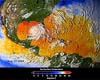 New York NY (SPX) Jan 11, 2006
The importance of remotely sensed data and technologies to support natural disasters has prompted attention and action in Washington. New initiatives and legislation authorizing appropriations to the remote sensing industry will be discussed at Strategic Research Institute's U.S. Commercial Remote Sensing Industry conference, scheduled for February 9-10, 2006 in Washington D.C. |
|
|

| The content herein, unless otherwise known to be public domain, are Copyright 1995-2006 - SpaceDaily.AFP and UPI Wire Stories are copyright Agence France-Presse and United Press International. ESA PortalReports are copyright European Space Agency. All NASA sourced material is public domain. Additionalcopyrights may apply in whole or part to other bona fide parties. Advertising does not imply endorsement,agreement or approval of any opinions, statements or information provided by SpaceDaily on any Web page published or hosted by SpaceDaily. Privacy Statement |