|
 |
 |
 |
 |
 |
 |
 |
 |

 |
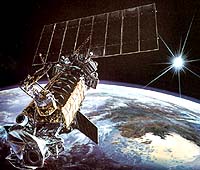
USAF Weather Satellite Delivered To Launch Site
Vandenberg AFB CA (SPX) Dec 17, 2007 The Defense Meteorological Satellite Program (DMSP) F-18 Block 5D-3 spacecraft, built under contract for the U.S. Air Force by Lockheed Martin Space Systems Company, Sunnyvale, Calif., has been delivered to Vandenberg Air Force Base, Calif., in preparation for a July 2008 launch. "We're proud to have our third Block 5D-3 spacecraft at the launch site," said Sue Stretch, Lockheed Martin DMSP program director. "Our partnership with the Air Force dates to the very beginning of the DMSP program with a common goal of ensuring that commanders have access to environmental data critical to the preparation and execution of military operations." The Block 5D-3 series accommodates larger sensor payloads than earlier generations. They also feature a larger capability power subsystem; a more powerful on-board computer with increased memory -- allowing greater spacecraft autonomy -- and increased battery capacity that extends the mean mission duration. DMSP is used for strategic and tactical weather prediction to aid the U.S. military in planning operations at sea, on land and in the air. Equipped with a sophisticated sensor suite that can image visible and infrared cloud cover, the satellite collects specialized meteorological, oceanographic, and solar-geophysical information in all weather conditions. The DMSP constellation comprises two spacecraft in near-polar orbits, C3 (command, control and communications), user terminals and weather centers. The most recent launch of a DMSP spacecraft took place on November 4, 2006 from Vandenberg Air Force Base. That launch marked the second of the Block 5D-3 satellites. Including F-18, three DMSP satellites remain to be launched. Those not at Vandenberg being prepared for launch are maintained at Space Systems' operations in Sunnyvale, Calif. for storage, functional testing and upgrading. The spacecraft are shipped to Vandenberg for launch when requested by the Air Force. Since 1965, 44 Lockheed Martin DMSP satellites have been launched successfully by the U.S. Air Force. Now in its fourth decade of service, the DMSP has proven itself to be a valuable tool in scheduling and protecting military operations on land, at sea and in the air. The Space and Missile Systems Center at Los Angeles Air Force Base, Calif. manages the DMSP program. Community Email This Article Comment On This Article Related Links Lockheed Martin Military Space News at SpaceWar.com
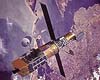
 Boeing Completes Key Space Based Space Surveillance System Tests
 St. Louis MO (SPX) Dec 12, 2007
Boeing has successfully completed a series of Space Based Space Surveillance (SBSS) system tests as part of the development of a new operational sensor for the U.S. Space Surveillance Network. Tests of the SBSS system's visible sensor, payload electronics and high speed gimbal further validate that the enhanced capability of SBSS will be twice as fast, substantially more sensitive and 10 times more accurate than the capabilities currently on orbit, resulting in improved detection of threats to America's space assets. |
|
|

| The content herein, unless otherwise known to be public domain, are Copyright 1995-2007 - SpaceDaily.AFP and UPI Wire Stories are copyright Agence France-Presse and United Press International. ESA Portal Reports are copyright European Space Agency. All NASA sourced material is public domain. Additional copyrights may apply in whole or part to other bona fide parties. Advertising does not imply endorsement,agreement or approval of any opinions, statements or information provided by SpaceDaily on any Web page published or hosted by SpaceDaily. Privacy Statement |