
 |
 |
 |
 |
 |
 |
 |
 |
 |

 |
USAF Develops Plan For Filling Unmanned Aircraft System Positions
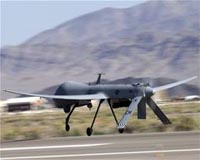
Secretary of the Air Force Public Affairs Washington DC (AFPN) Sep 22, 2008 Air Force leaders are taking a two-pronged approach to address the increasing need for pilots of unmanned aircraft systems in Afghanistan and Iraq, an Air Force official said recently. The first approach will use a small percentage of undergraduate pilot training graduates for the short term. The second will examine the potential for a distinct career path for Airmen to fly unmanned aircraft. "The UPT approach will happen quickly," said Col. Pete Lee, chief of the operational training division in Air Staff Operations. In the next couple of weeks, Air Force officials will select approximately 10 percent of UPT graduates to begin UAS training when they graduate in October. Their UAS training will be at Creech Air Force Base, Nevada. After completing a standard UAS tour, UPT Airmen will receive a follow-on assignment to a manned aircraft, Colonel Lee added. In January 2009, the Air Force will begin the second approach, a small-group testing of a program to train approximately 10 active-duty officers to specifically fly unmanned aircraft. Colonel Lee said the lessons learned from the first group will be used to train a second group of 10. Initial training will begin in Pueblo, Colo., where the Air Force conducts introductory flight screening. UAS-specific training will follow with full major weapons system qualification completed at Creech. "The plan is to develop and validate training programs that prepare non-UPT pilots for wartime UAS duty," Colonel Lee said. "We will continue to uphold the highest levels of Air Force flight safety standards." The colonel said this is a historic time for the Air Force. "Pilots flying unmanned aircraft today and Airmen selected for the new UAS training program are charting ground-breaking paths for the Air Force," Colonel Lee said. "They are truly trailblazers." The Air Force general in charge of oversight of air, nuclear, space, cyber and weather operations for the Air Staff said the demand for UAS in theater is critical. "The combat contributions of unmanned aircraft systems in today's fight have surpassed all expectations and have taken a crucial role in our ongoing operations in Iraq and Afghanistan," said Lt. Gen. Daniel Darnell, Air Force deputy chief of staff for operations, plans and requirements. "The surveillance-only role of UAS has rapidly expanded to include strike, force protection, and additional intelligence, surveillance and reconnaissance missions," the general added. Colonel Lee said unmanned aircraft are the tip of the spear for Air Force combat operations in Afghanistan and Iraq because of "their ability to identify, track and engage our enemies." From January to August of this year, MQ-1 Predators and MQ-9 Reapers flew more than 4,400 sorties, logging over 81,800 combat flight hours. They also engaged more than 9,900 ISR targets and were an integral asset during more than 300 incidents of troops in contact with the enemy and more than 1,000 raids. Community Email This Article Comment On This Article Share This Article With Planet Earth
Related Links UAV News - Suppliers and Technology
 Unmanned Aircraft Continue To Prove Worth On Modern Battlefield
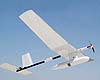 Newtown CT (SPX) Sep 19, 2008
"A clear winner in the recent Russo-Georgian War is unmanned aircraft," said Larry Dickerson, Unmanned Vehicles Analyst for Forecast International. "This fighting shows that even small conflicts are likely to see the participation of unmanned air vehicles," Dickerson said. |
|
|

| The content herein, unless otherwise known to be public domain, are Copyright 1995-2007 - SpaceDaily.AFP and UPI Wire Stories are copyright Agence France-Presse and United Press International. ESA Portal Reports are copyright European Space Agency. All NASA sourced material is public domain. Additional copyrights may apply in whole or part to other bona fide parties. Advertising does not imply endorsement,agreement or approval of any opinions, statements or information provided by SpaceDaily on any Web page published or hosted by SpaceDaily. Privacy Statement |
 del.icio.us
 Digg
Digg Reddit
 YahooMyWeb
 Google
 Facebook