|
 |
 |
 |
 |
 |
 |
 |
 |

 |
U.N. Could Have Seen Food Crisis In Niger
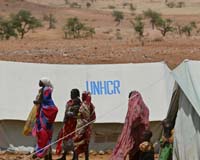
United Nations (UPI) Jul 20, 2005 The chief U.N. humanitarian coordinator says famine in Niger was seen coming and it and similar situations could have been averted if the world organization had a $500 million fund to "kick-start" emergency appeals. The U.N. Office for the Coordination of Humanitarian Affairs reports 2.5 million people in the nation are living on less than one meal a day, said Marie Okabe, a spokeswoman Wednesday at U.N. World Headquarters in New York. A flash appeal, or call for emergency funding, launched in May has been upped from $16 million to $30 million, following the World Food Program's need for additional assistance, she said. So far only $10 million has been pledged. About the same time, Undersecretary-General for Humanitarian Affairs Jan Egeland called Niger "the No. 1 forgotten and neglected emergency in the world." The relief office, known as OCHA, has deployed extra personnel to Niger, landlocked in West Africa. "We are having now an acute humanitarian crisis in Niger in which children are dying as we speak," he said Tuesday. "We could have prevented this and the world community didn't." He said 800,000 children in a nation of 13 million people were malnourished, an estimated 150,000 of them "with acute malnutrition effects, which means they will very soon die unless treated. "Under the best of circumstances, 40 per cent of Niger's children - or one million - suffer some form of malnutrition," the U.N. Children's Fund, UNICEF, has said, adding the number increased dramatically because of the current food shortage. "I just got a report from one of the nutritional feeding centers that last week out of 61 severely malnourished children that were treated in a dispensary, 14 died because it is too late," Egeland said. The reason, lack of funding, Egeland said, adding that he and U.N. Secretary-General Kofi Annan "have proposed a central emergency fund so that we can have some kind of capability in these situations. As of now I feel we have none." This was despite an existing $50 million central emergency relief fund. "But that is a revolving fund," Egeland said. "It's a loan mechanism. In situations like Niger where there is no international response, the (relief) agencies do not dare to loan money. Therefore the system doesn't work as it is. Also it is the same level of money now as it was in 1992 when it was proposed." They want to expand the $50 million fund and make it grant-based. "We propose a $500 million fund for which we can jump start theses operations immediately when there are early warning signs," the relief chief said. The present crisis was forecast. "In 2004, Niger was particularly devastated by a locust invasion which had biblical proportions, because it ate everything green in Niger," he said. "Since last year up, until now, July, it's been dry." Egeland said the locust invasion, described as the worst in 15 years, was followed by drought, in a country that already was "one of two lowest on the human development indicator. He said when appeals are ignored, the cost of saving lives increases. "It costs $80 to save a child's life through these therapeutic feeding centers but costs only $1 a day to prevent a child coming to this situation," Egeland said. "I think this (crisis) could have been prevented." The U.N. food agency, WFP, and the government of Niger in March asked for assistance. They met with donors in May and issued the flash appeal May 25. "Only now do you really get some funding," he said. "We asked for $16 million the first month," the undersecretary-general said. "We got virtually nothing. I am sure we got $1 million or so. Now we have an appeal out for $30 million." Egeland said, "I have very positive pledges" received in the last few days from Europeans, some Arab and African countries including neighbors of Niger. "WFP needs 23,000 tons of food to meet urgent needs and needs to replenish emergency food stocks of the Nigerian government of 110,000 tons because these have been emptied." he said, adding the local cereals were millet and sorghum, although, "We are using rice, wheat." As for the present crisis in Niger, Egeland said, "I am convinced now that we have images coming out of children dying, we will get some funds, but it is too late for many." Asked about other food crises in Africa, Okabe, the spokeswoman noted that a number of areas in Africa were undergoing serious crises. Egeland had been raising attention to those "forgotten" emergencies, and the United Nations has appealed for help so that other areas do not become major crises as has happened in Niger. Community Email This Article Comment On This Article Related Links SpaceDaily Search SpaceDaily Subscribe To SpaceDaily Express Nuclear Space Technology at Space-Travel.com
 China Hits Out At Japan Over UN Seat
 Beijing (AFP) Dec 01, 2005
China suggested Thursday it does not consider Japan fit for a permanent seat at the United Nations Security Council, addressing the sensitive issue just days before a visit by UN Secretary General Kofi Annan. |
|
|

| The content herein, unless otherwise known to be public domain, are Copyright 1995-2006 - SpaceDaily.AFP and UPI Wire Stories are copyright Agence France-Presse and United Press International. ESA PortalReports are copyright European Space Agency. All NASA sourced material is public domain. Additionalcopyrights may apply in whole or part to other bona fide parties. Advertising does not imply endorsement,agreement or approval of any opinions, statements or information provided by SpaceDaily on any Web page published or hosted by SpaceDaily. Privacy Statement |