|
 |
 |
 |
 |
 |
 |
 |
 |

 |
U.N: 2050 World Population To Hit 9.1B
United Nations (UPI) Feb 24, 2005 Global population is expected to increase by 2.6 billion people, to 9.1 billion in 2050, - the equivalent of adding China and India's population today - the United Nations said Thursday. The increase is equal to the population of the world in 1950. The hike is expected mainly in developing countries. Hania Zlotnik, director of the Population Division of the Department of Economic and Social Affair, told reporters at U.N. World Headquarters in New York that "the world population is going to stabilize at about 9 billion. Zlotnik said about 9 billion was "the magic number." "It is going to be a strain on the world. But it seems feasible. It doesn't seem that there's a crisis coming." However, Zlotnik added, "If we reduce mortality and maintain essentially the same fertility (rate as at present) for 300 years we get trillions of people. We know that that cannot happen." The figures she cited were from the 2004 Revision of the official U.N. population estimates and projections, released Thursday. The report provided demographic information and population figures for the coming assessment of progress made towards achieving the Millennium Development Goals. By July 2005, the world was expected to have 6.5 billion inhabitants, 380 million more than in 2000 or a gain of 76 million annually, the report said. Despite the lower fertility levels projected, by 2050 the world population was expected to reach 9.1 billion according to the medium variant and would still be adding 34 million persons annually by mid-century. Future population growth was highly dependent on the path that future fertility takes, it said. In the medium variant, fertility declined from 2.6 children per woman at prese nt to slightly over 2 children per woman in 2050. If fertility were to remain about half a child above the levels projected in the medium variant, world population would reach 10.6 billion by 2050. A fertility path half a child below the medium would lead to a population of 7.7 billion by mid-century. That is, at the world level, continued population growth until 2050 was inevitable even if the decline of fertility accelerated. As to what the world population would be beyond 2050, she said, "Provided that we assume most populations are going to spend about 100 years with a regime where the population is going to be decreasing, the world population is going to stabilize at about 9 billion." If the fertility level was constant, even with a decline in mortality because of medical advances, "We get already 11.7 billion people by 2050. So that is probably an upper limit. Beyond that it's not likely to go in this century," s he said. "With any luck we will be in the path closer to when it stabilizes at 9 billion. So 9 billion is 2.6 billion more than today. Because of its low and declining rate of population growth, the population of developed countries as a whole was expected to remain virtually unchanged between 2005 and 2050, at about 1.2 billion, the report said. But, the population of the 50 least developed countries was projected to more than double, passing from 800 million in 2005 to 1.7 billion in 2050. Growth in the rest of the developing world was also projected to be robust, although less rapid, with its population rising from 4.5 billion to 6.1 billion between 2005 and 2050. Very rapid population growth was expected in a number of developing countries, the majority of which were the least developed, the report said. Between 2005 and 2050, the population was projected to at least triple in Afghanistan, Burkin a Faso, Burundi, Chad, Congo, the Democratic Republic of Congo, the Democratic Republic of Timor-Leste, Guinea-Bissau, Liberia, Mali, Niger and Uganda. Community Email This Article Comment On This Article Related Links SpaceDaily Search SpaceDaily Subscribe To SpaceDaily Express Dirt, rocks and all the stuff we stand on firmly
 Magnetic Reconnection Region Larger Than 2.5 Million Km Found In The Solar Wind
 Paris (ESA) Jan 12, 2006
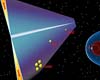
Using the ESA Cluster spacecraft and the NASA Wind and ACE satellites, a team of American and European scientists have discovered the largest jets of particles created between the Earth and the Sun by magnetic reconnection. This result makes the cover of this week's issue of Nature. |
|
|

| The content herein, unless otherwise known to be public domain, are Copyright 1995-2006 - SpaceDaily.AFP and UPI Wire Stories are copyright Agence France-Presse and United Press International. ESA PortalReports are copyright European Space Agency. All NASA sourced material is public domain. Additionalcopyrights may apply in whole or part to other bona fide parties. Advertising does not imply endorsement,agreement or approval of any opinions, statements or information provided by SpaceDaily on any Web page published or hosted by SpaceDaily. Privacy Statement |