|
 |
 |
 |
 |
 |
 |
 |
 |

 |
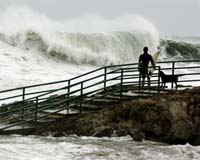
Typhoon Chanchu makes landfall in China
Beijing (AFP) May 17, 2006 Typhoon Chanchu reached southern China early Thursday, meteorologists said, after some 620,000 people were evacuated in preparation for the strongest storm to hit the region at this time of year. The Hong Kong Observatory said the typhoon hit the coast to the east of Shantou in Guangdong province, and there were no immediate reports of casualties or damage. The storm was centred about 120 kilometres (75 miles) southwest of the coastal city of Xiamen and was expected to continue moving north across Fujian province, the observatory said. As of Wednesday afternoon 320,000 people had been evacuated from Guangdong's coastal areas alone, China Central Television reported. The province also ordered more than 58,000 fishing boats and other vessels to return to their home ports. Another 300,000 people were relocated from areas in Fujian, the report said. The typhoon, which killed 41 people and left thousands homeless when it tore through the Philippines last week, is the strongest on record to have entered the South China Sea in May, the Observatory said. Nevertheless, there was no sense of national emergency in China as mass evacuations during the typhoon season are relatively common. The storm was initially expected to hit Hong Kong, but changed course over the South China Sea and brushed past the territory.
620,000 evacuated in southern China as Typhoon Chanchu nears As of Wednesday afternoon 320,000 people including fishermen had been evacuated from Guangdong's coastal areas, China Central Television reported. The province also ordered more than 58,000 fishing boats and other vessels to return to their home ports. Another 300,000 people were relocated from areas in the eastern province of Fujian and all boats were recalled to port, the report said. The State Flood Control and Drought Relief Headquarters urged residents to get out of harm's way and sent a team to Guangdong to direct typhoon-preparation work. The typhoon, which killed 41 people and left thousands homeless when it tore through the Philippines Saturday, is the strongest on record to have entered the South China Sea in May, the Hong Kong Observatory said. Nevertheless, there was no sense of national emergency in China as mass evacuations during the typhoon season are relatively common. In nearby Hong Kong 55 flights were cancelled, most of which were heading for mainland China. Many ferry services were suspended and beaches closed in Hong Kong, although the typhoon passed some distance from the territory. Off Taiwan, 13 crew members aboard a Bolivian-registered oil tanker were rescued Wednesday after it ran aground amid high waves whipped up by Typhoon Chanchu. Around 5:00 pm (0900 GMT), the eye of the storm was located 180 kilometers (111 miles) south of Guangdong's Shanwei city as rain began to pelt the region, the China News Service reported. "It's travelling at 15 kilometers (9.4 miles) per hour," an employee from the Guangdong Provincial Hydrological Bureau told AFP. "We expect it will land early tomorrow morning in an area between Shanwei and Chaozhou cities." Local observatories were quoted by state media as saying the typhoon was moving northeastwards at 20 to 23 kilometers per hour, packing winds of 162 kilometers per hour near its center, and may slam into the coastal area between Shenzhen and Raoping counties early Thursday. However it may veer east toward Fujian province and the Taiwan Strait instead, the China Daily quoted meteorologists from the Guangzhou Meteorological Station as saying. Shantou city in the east of Guangdong could then be hardest hit, they said. In Guangdong's Shenzhen city, local authorities issued landslide warnings at some high-risk places and were ready to evacuate people if necessary, the China Daily said. Advertisement billboards were either reinforced or removed. The city government advised people to stay home, close windows and move flowerpots from balconies. Four flights at the Guangzhou Baiyun international airport in Guangdong's capital were cancelled, state-run CCTV station said, adding that flights in other cities in the province were also affected. Nearby Fujian and Hainan provinces were also braced for damage. Hainan ordered a halt to sea and rail transport across the Qiongzhou Strait between the island and Guangdong. Hong Kong and Guangdong regularly suffer torrential rain and flooding from typhoons that generally occur between May and November. Community Email This Article Comment On This Article Related Links Bringing Order To A World Of Disasters When the Earth Quakes A world of storm and tempest
 Millions of US coastal residents not taking hurricane threat seriously: poll
 Miami (AFP) May 16, 2006
 One year after the deadly Hurricane Katrina devastated New Orleans, millions of Americans in hurricane-prone areas are paying little heed to the threats posed by the powerful storms, according to a survey Tuesday. |
|
|

| The content herein, unless otherwise known to be public domain, are Copyright 1995-2006 - SpaceDaily.AFP and UPI Wire Stories are copyright Agence France-Presse and United Press International. ESA PortalReports are copyright European Space Agency. All NASA sourced material is public domain. Additionalcopyrights may apply in whole or part to other bona fide parties. Advertising does not imply endorsement,agreement or approval of any opinions, statements or information provided by SpaceDaily on any Web page published or hosted by SpaceDaily. Privacy Statement |