|
 |
 |
 |
 |
 |
 |
 |
 |

 |
Twenty years on, Japan's 'Hope' lab to blast into space
Tokyo (AFP) March 6, 2008 Japan will take a major step towards setting up its first manned space facility next week, when a US shuttle is to deliver the first piece of the multi-billion-dollar lab after 20 years of development. The Japanese laboratory, called Kibo -- Japanese for "Hope" -- will be established in three deliveries into space. The US shuttle Endeavour is due to take off on the first trip on March 11. Japan, the world's second largest economy, has few natural resources and has staked its future on advanced technology. "Japan's only weapon is technology," said Yoshiya Fukuda, a senior official handling manned space projects at the Japan Aerospace Exploration Agency (JAXA). "Even if we are not the very front-runner in space development, we must be second or so," he said in an interview with AFP. "What else can we do in a country with scant resources and lots of old people?" Japan has set a goal of sending an astronaut to the moon by 2020, a feat achieved with fanfare in 2003 by its giant neighbour and sometime rival China. It was in 1985 that Japan decided to join the project championed by then US president Ronald Reagan to build an orbiting International Space Station (ISS). Development started three years later but assembly of the ISS began only in 1998 due to space shuttle accidents and budgetary problems of the participants, which now include Canada, Europe, Japan, Russia and the United States. Endeavour is to deliver a storage room for Kibo that will eventually hold materials and devices for experiments. Veteran Japanese astronaut Takao Doi will be on board and dock the storage room at the ISS during a 16-day mission. "Japan will have its first house in space," Doi, 53, told reporters. "I'll strive to show results that will match the efforts and investment so far." Another space shuttle in May is to take the primary 11.2-metre (37-foot) long cylindrical lab, large enough to house a big tour bus, as well as a robotic arm. A flight scheduled for March 2009 will complete the Japanese lab with a porch exposed directly to outer space for experiments under a high vacuum, microgravity, solar energy and radiation. The exposed segment, which is completely open to space and attached by the robotic arm, is unique to the Japanese facility -- unseen in US or Russian annexes or the European space laboratory Columbus installed in February. Experiments at Kibo, which has some two million components, are expected to start from around late July this year, Fukuda said. Microgravity enables scientists to make pure crystals, which could be used in developing revolutionary pharmaceuticals, materials used in semiconductors and other new products, he said. Japan has spent a total of 680 billion yen (6.6 billion dollars) on human space development since it decided to join the ISS, including 98 billion yen on Kibo's hardware development and manufacturing. The total cost is expected to exceed a staggering one trillion yen (9.7 billion dollars). But Fukuda said the long-running project is not only about money. "It gives dreams to children, which money can't buy," he said. As Japan frets over surveys which shown that its children are losing interest in science, it has planned plenty of Kibo-related events to attract public curiosity. Doi plans to throw a three-pronged boomerang inside a space station to test how it can fly in microgravity, an experiment never done before. Major sporting goods maker Asics Corp. is developing a pair of space sneakers that look like ninja shoes with the separate big toe. The company hopes Japanese astronaut Koichi Wakata, who is to take off in December to wait at the ISS for the final batch of Kibo's parts, will use them for daily training to prevent muscle loss. Japan is also expanding a culinary frontier by supplying instant noodles, curry and other favourite Japanese foods to astronauts. "I think it's only a matter of time before we will see sushi in space," Fukuda said. Community Email This Article Comment On This Article Related Links Station at NASA Station and More at Roscosmos S.P. Korolev RSC Energia Watch NASA TV via Space.TV Space Station News at Space-Travel.Com
 Space Station Orbit Raised Five Clicks
 Moscow (RIA Novosti) Mar 03, 2008
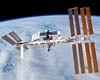
The orbital altitude of the International Space Station (ISS) has been increased by 5 kilometers (3 miles), a spokesman for the Russian Mission Control Center said on Thursday. "The correction of the orbit of the ISS started at 8:16 a.m. Moscow time [5:16 a.m. GMT] by using thrusters on the Russian module Zvezda," the spokesman said, adding that the procedure had lasted 123 seconds. |
|
|

| The content herein, unless otherwise known to be public domain, are Copyright 1995-2007 - SpaceDaily.AFP and UPI Wire Stories are copyright Agence France-Presse and United Press International. ESA Portal Reports are copyright European Space Agency. All NASA sourced material is public domain. Additional copyrights may apply in whole or part to other bona fide parties. Advertising does not imply endorsement,agreement or approval of any opinions, statements or information provided by SpaceDaily on any Web page published or hosted by SpaceDaily. Privacy Statement |