|
 |
 |
 |
 |
 |
 |
 |
 |

 |
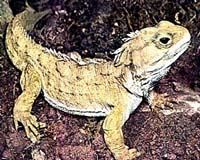
Tuatara - The Fastest Evolving Animal
Palmerston North, New Zealand (SPX) Mar 25, 2008 In a study of New Zealand's "living dinosaur" the tuatara, evolutionary biologist, and ancient DNA expert, Professor David Lambert and his team from the Allan Wilson Centre for Molecular Ecology and Evolution recovered DNA sequences from the bones of ancient tuatara, which are up to 8000 years old. They found that, although tuatara have remained largely physically unchanged over very long periods of evolution, they are evolving - at a DNA level - faster than any other animal yet examined. The research will be published in the March issue of Trends in Genetics. "What we found is that the tuatara has the highest molecular evolutionary rate that anyone has measured," Professor Lambert says. The rate of evolution for Adelie penguins, which Professor Lambert and his team have studied in the Antarctic for many years, is slightly slower than that of the tuatara. The tuatara rate is significantly faster than for animals including the cave bear, lion, ox and horse. "Of course we would have expected that the tuatara, which does everything slowly - they grow slowly, reproduce slowly and have a very slow metabolism - would have evolved slowly. In fact, at the DNA level, they evolve extremely quickly, which supports a hypothesis proposed by the evolutionary biologist Allan Wilson, who suggested that the rate of molecular evolution was uncoupled from the rate of morphological evolution." Allan Wilson was a pioneer of molecular evolution. His ideas were controversial when introduced 40 years ago, but this new research supports them. Professor Lambert says the finding will be helpful in terms of future study and conservation of the tuatara, and the team now hopes to extend the work to look at the evolution of other animal species. "We want to go on and measure the rate of molecular evolution for humans, as well as doing more work with moa and Antarctic fish to see if rates of DNA change are uncoupled in these species. There are human mummies in the Andes and some very good samples in Siberia where we have some collaborators, so we are hopeful we will be able to measure the rate of human evolution in these animals too." The tuatara, Sphendon punctatus, is found only in New Zealand and is the only surviving member of a distinct reptilian order Sphehodontia that lived alongside early dinosaurs and separated from other reptiles 200 million years ago in the Upper Triassic period. Community Email This Article Comment On This Article Related Links Allan Wilson Centre for Molecular Ecology and Evolution Darwin Today At TerraDaily.com
 Ancient Reptile Rises From Alberta Oil Sands
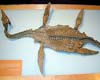 Calgary, Canada (SPX) Mar 25, 2008
One of the oldest and most complete plesiosaur fossils recovered in North America, and the oldest yet discovered from the Cretaceous Period, represents a new genus of the prehistoric aquatic predator according to University of Calgary palaeontologists who have formally described the creature after its remains were uncovered in a Syncrude Canada Ltd. mine near Fort McMurray in 1994. |
|
|

| The content herein, unless otherwise known to be public domain, are Copyright 1995-2007 - SpaceDaily.AFP and UPI Wire Stories are copyright Agence France-Presse and United Press International. ESA Portal Reports are copyright European Space Agency. All NASA sourced material is public domain. Additional copyrights may apply in whole or part to other bona fide parties. Advertising does not imply endorsement,agreement or approval of any opinions, statements or information provided by SpaceDaily on any Web page published or hosted by SpaceDaily. Privacy Statement |