|
 |
 |
 |
 |
 |
 |
 |
 |

 |
Tsunami Victims Receive Treatment Via Satellite
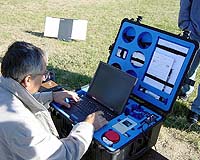
Paris, France (ESA) Jan 20, 2005 The ESA funded telemedicine project called I-DISCARE has been put into action to help victims along the coastal areas ravaged by last month's tsunami. It is being used to connect mobile teams of rescue workers with hospitals via satellite, greatly improving medical care. On the initiative of the French Space Agency (CNES) with transport costs paid by them as well, three Portable Telemedicine Work (PTW) Stations have been lent to the Indian telemedicine company IndoComputech. These are being used on the east coast of India by mobile teams of doctors and paramedics, connecting them with central hospitals at Lucknow, Madras and Ahmadabad. A further five more Compact Data Terminals (CDT) are being used on the east coast of India by Mobile Sanitary teams. These teams are sending information on epidemiology as well as the quality and supply of water and nutrition to Public Health Institutions in New Delhi and SE coast District Centres. Doctors and paramedics equipped with these Global Positioning System (GPS) capable terminals are better able to treat patients at the scene while still maintaining close contact with Mobile Field Hospitals, a Permanent Centre or Reference Hospital; even if located outside the country. The result ensures earlier patient identification as well as quicker and more traceable data collection resulting in faster triage and better care. Dr. Bernard Comet from MEDES: The Institute for Space Medicine and Physiology and Prime Contractor behind I-DISCARE said, "The quick availability of I-DISCARE makes it an excellent solution for these types of emergencies. I'm very pleased that we have been chosen to be a part of this very valuable endeavour."
I-DISCARE I-DISCARE is a follow-up from an earlier ESA Telecom funded project DELTASS which completed just two years ago and stirred a great deal of media interest, proving that satellite systems can be both cost effective and adaptable to disaster situations where ground infrastructures are partly or completely destroyed. I-DISCARE combined the talents of MEDES and Elsacom of Italy which acted as the satellite service provider and the Norwegian Centre for Telemedicine. The project concluded with a series of pilot deployments culminating in a large demonstration in Troms� Norway in October 2004. The list of potential users is long, with any unit needing to work in remote areas under difficult conditions from humanitarian aid workers to emergency medical and rescue workers benefitting. The I-DISCARE project team is presenting the final results of the ESA funded project at ESA/ESTEC Noordwijk, the Netherlands at 13:00 on 19 January 2005. Community Email This Article Comment On This Article Related Links ESA Telecom specialist site ESA Telecom - Telemedicine I-DISCARE DELTASS SpaceDaily Search SpaceDaily Subscribe To SpaceDaily Express Space Medicine Technology and Systems
 Genomic Sequences Processed In Minutes, Rather Than Weeks
 Richland WA (SPX) Jun 22, 2005
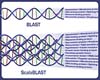
A new computational tool developed at the Department of Energy's Pacific Northwest National Laboratory is speeding up our understanding of the machinery of life - bringing us one step closer to curing diseases, finding safer ways to clean the environment and protecting the country against biological threats. |
|
|

| The content herein, unless otherwise known to be public domain, are Copyright 1995-2006 - SpaceDaily.AFP and UPI Wire Stories are copyright Agence France-Presse and United Press International. ESA PortalReports are copyright European Space Agency. All NASA sourced material is public domain. Additionalcopyrights may apply in whole or part to other bona fide parties. Advertising does not imply endorsement,agreement or approval of any opinions, statements or information provided by SpaceDaily on any Web page published or hosted by SpaceDaily. Privacy Statement |