|
 |
 |
 |
 |
 |
 |
 |
 |

 |
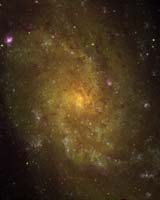
Triangulum Galaxy Shines In New Portrait
Cambridge MA (SPX) Jun 15, 2006 In this new image from the Multiple-Mirror Telescope Observatory's 6.5-meter telescope, the Triangulum galaxy reveals stunning swirls of stars and dust dotted with brilliant pink nebulae. The new photograph of the Triangulum galaxy showcases the dazzling capabilities of MMT's new Megacam instrument. Megacam was developed at the Smithsonian Astrophysical Observatory (SAO) in Cambridge, Mass., under the direction of astronomer Brian McLeod. The state-of-the-art camera consists of 36 CCD chips, each containing 9-million pixels, making Megacam one of the largest digital cameras in the world. "Megacam is like a turbocharged household digital camera," said SAO astronomer Nelson Caldwell. "While a typical digital camera might have eight or nine megapixels, Megacam has 340 megapixels." Caldwell and McLeod said they picked the Triangulum galaxy to be one of the first objects photographed by Megacam, because the galaxy - also known as Messier 33 or M33 for its designation in the catalog compiled by Charles Messier � lies about 2.4 million light-years from Earth. It spans about twice the diameter of the full Moon in the night sky. Although large, its light is diffuse, making it a challenging object to spot with the unaided eye. The view of M33 is best in binoculars or small telescopes at low magnification. Newly formed blue stars and dark dusty patches outline the spiral arms of M33. Pink filaments of hydrogen gas mark regions of active star formation similar to the Milky Way's Orion Nebula. The eye-catching nebula at upper left in this image, designated NGC 604, stretches across 1,500 light-years and holds more than 200 hot, young stars that light it from within. Triangulum is the smallest of the three spirals in the local neighborhood, holding as much mass as 10-40 billion suns, while the Milky Way holds about 200 billion suns' worth of normal matter. Andromeda is even heftier. "Triangulum is not a colossal giant like the Milky Way or Andromeda," Caldwell said, "but it has a charm and beauty of its own that belies its junior citizen status." The MMT telescope contains a primary mirror 256 inches (6.5 meters) in diameter, making it among the largest optical telescopes in the world. Astronomers use the MMT for various projects such as searching for extrasolar planets, making 3-d maps of galaxies in space, and finding quasars that existed when the universe was only one-tenth of its present age. SAO operates the MMT Observatory, located south of Tucson, Ariz., in partnership with the University of Arizona. Community Email This Article Comment On This Article Related Links MMT SAO Stellar Chemistry, The Universe And All Within It
 XMM-Newton Spots Greatest Ball Of Fire
 Baltimore MD (SPX) Jun 13, 2006
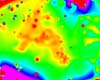
Thanks to data from ESA's XMM-Newton X-ray satellite, a team of international scientists has found a comet-like ball of gas over a billion times the mass of the Sun hurling through a distant galaxy cluster at more than 750 kilometers (465 miles) per second. |
|
|

| The content herein, unless otherwise known to be public domain, are Copyright 1995-2006 - SpaceDaily.AFP and UPI Wire Stories are copyright Agence France-Presse and United Press International. ESA PortalReports are copyright European Space Agency. All NASA sourced material is public domain. Additionalcopyrights may apply in whole or part to other bona fide parties. Advertising does not imply endorsement,agreement or approval of any opinions, statements or information provided by SpaceDaily on any Web page published or hosted by SpaceDaily. Privacy Statement |