|
 |
 |
 |
 |
 |
 |
 |
 |

 |
Traffic Jam Hotspots Pinpointed In Advance
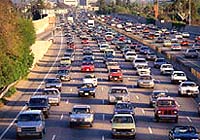
Paris (ESA) Dec 17, 2002 Road Traffic Monitoring by Satellite (RTMS) is an innovative trial system that uses a fleet of 'tracer' vehicles to detect congestion. Using GPS position, an in-car computer and the ESA developed PRODAT mobile communication system, traffic data is reported via satellite to a central facility. Compared to conventional detection methods, a satellite-based in-car system offers better coverage and better data at potentially competitive costs. Congestion of public road networks is an increasing problem in many countries. As any traffic management strategy is only as good as the information it relies on, authorities need traffic data that is accurate, reliable, timely and comprehensive. Road users also need good quality traffic information in order to plan and adjust their routes. The RTMS field trial, undertaken by ARS Traffic and Transport Technology (NL) and TU Dresden (D) with support from ESA Telecom's User Segment Programme line, started in March 1999 and was successfully completed in November 2002. The trial took place in the busy Rotterdam and Den Haag districts of the Netherlands, and consisted of a pilot system installed in a fleet of 15 postal service and delivery vehicles. No interaction was necessary between the driver and the system during the trial. The large amount of usable data gathered from the vehicles demonstrated that the coverage of the satellite system is viable for collecting valuable real-time traffic data, even in densely urbanised areas. Floating car data, the concept behind RTMS, works by using a relatively small percentage of the vehicle population to produce real-time traffic information, just by driving around. This allows for the collection of traffic data over the whole road network -- not just bottlenecks -- including towns, cities, rural roads and motorways not covered by GSM, GPRS or UMTS systems. The floating car data principle also gives information of better quality: 'tracer' vehicles are able to produce travel times over a series of road segments, while traditional systems measure the traffic only at one point. A satellite-based in-car system can provide many services in addition to traffic monitoring, such as fleet management, logistics support, emergency and breakdown service and theft protection. If integrated with other systems, it can provide real time route guidance and navigation information and location dependent services (such as locating the nearest bank at a given point during a journey). Community Email This Article Comment On This Article Related Links ESA Telecom homepage ESA Telecom - User segment ESA Telecom project - Road Traffic Monitoring by Satellite SpaceDaily Search SpaceDaily Subscribe To SpaceDaily Express Space Technology News - Applications and Research
 Industry Team Achieve New Communications Technology With AESA Radars
 Baltimore MD (SPX) Jan 12, 2006
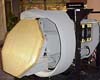
A team comprised of three leading US aerospace and defense contractors has demonstrated an innovative technological use of active electronically scanned array (AESA) radars for high-bandwidth communications. |
|
|

| The content herein, unless otherwise known to be public domain, are Copyright 1995-2006 - SpaceDaily.AFP and UPI Wire Stories are copyright Agence France-Presse and United Press International. ESA PortalReports are copyright European Space Agency. All NASA sourced material is public domain. Additionalcopyrights may apply in whole or part to other bona fide parties. Advertising does not imply endorsement,agreement or approval of any opinions, statements or information provided by SpaceDaily on any Web page published or hosted by SpaceDaily. Privacy Statement |