|
 |
 |
 |
 |
 |
 |
 |
 |

 |
Traditional Chinese Medicine Applied In Space Flights
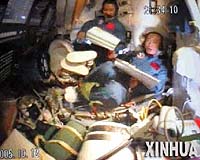
Beijing (SPX) Dec 05, 2005 Traditional Chinese medicine, has been widely used in counteracting space motion sickness in China's space flight missions. During space flight, there is up to a 50 percent chance for astronauts to feel space motion sickness. However, during the five-day Shenzhou-6 mission, Fei Junlong and Nie Haisheng always maintained sound physical conditions. Apart from specific exercises beforehand, traditional Chinese medicines also contributed. Director of the China Astronaut Research and Training Center Chen Shan'guang says Traditional Chinese medicines proved to be effetive when pilots carry out space missions. "Before astronauts go to space, they take traditional Chinese medicines which enhance their ability to maintain balance and improve their immune system. According to the feedback of the two Shenzhou-6 astronauts, these measures have had positive effects." Chen said. In their everyday training, Chinese medicinal herbs, Chinese massage therapy and accupuncture have been used to improve astronauts' physical conditions. The China Astronaut Research and Training Centre is cooperating with the laboratory from the Chinese University of Hong Kong to better prevent the loss of calcium in bones during a zero-gravity situation. Chen says China will continue to promote the use of traditional Chinese medicines on astronauts. "We may continue to use Chinese medicines in China's manned-space flights and we will also promote traditional Chinese medicines in some international space missions to counteract the space motion sickness." he said. Community Email This Article Comment On This Article Related Links SpaceDaily Search SpaceDaily Subscribe To SpaceDaily Express The Chinese Space Program - News, Policy and Technology China News from SinoDaily.com
 Taikonauts On Moon A Far Off Dream For China Yet
 Beijing (XNA) Jan 05, 2006
A one-year lunar fly-by mission may start in April 2007 in China, but a manned flight to the Earth's neighbour may be a long way away, a chief lunar exploration scientist said last night. |
|
|

| The content herein, unless otherwise known to be public domain, are Copyright 1995-2006 - SpaceDaily.AFP and UPI Wire Stories are copyright Agence France-Presse and United Press International. ESA PortalReports are copyright European Space Agency. All NASA sourced material is public domain. Additionalcopyrights may apply in whole or part to other bona fide parties. Advertising does not imply endorsement,agreement or approval of any opinions, statements or information provided by SpaceDaily on any Web page published or hosted by SpaceDaily. Privacy Statement |