|
 |
 |
 |
 |
 |
 |
 |
 |

 |
Tracing A Metal Link
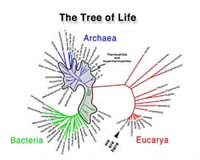
San Diego CA (SPX) Nov 13, 2006 Researchers in computational biology and marine science have combined their diverse expertise and found that trace-metal usage by present-day organisms probably derives from major changes in ocean chemistry occurring over geological time scales. Using protein structures for the first time in such a study, the research establishes one of the influences that geochemistry has had upon life. The study, published in the Proceedings of the National Academy of Sciences, sought to verify the theory that the rise in atmospheric oxygen some 2.3 billion years ago, and attendant shifts in ocean chemistry, led to changes in types of metals used with protein structures. Such changes are hypothesized to have led to the diversification and increased complexity of the life we see today. Scientists Chris Dupont, Song Yang, Brian Palenik and Philip Bourne from the San Diego Supercomputer Center (SDSC), Scripps Institution of Oceanography, and the departments of chemistry and biochemistry and pharmacology at the University of California, San Diego (UCSD) analyzed the metal-binding characteristics of all known protein structures found in all kingdoms of life. Protein structures are ideal for this study, Bourne said, since they are much more conserved than protein sequences, traditionally used in such studies and, furthermore, metal binding can be inferred directly. Using data generated by Dupont and Yang, the group established that the three superkingdoms of life Archaea, Bacteria and Eukarya -- all use metals differently. The differences reflect the availability of such metals in the ocean as the respective superkingdoms evolved. The authors conclude that, these conserved trends are proteomic imprints of changes in trace-metal bioavailability in the ancient ocean that highlight a major evolutionary shift in biological trace-metal usage. The changes in trace-metal availability are believed to have been brought about by the biologically caused rise in atmospheric oxygen some 2.3 billion years ago, highlighting the co-evolution of biology and geochemistry on a global scale. Here, a biological phenomenon, photosynthesis, changed the availability of trace metals in the oceans, Dupont said, resulting in a reciprocal change in biological evolution still observable today. The group notes that, such studies linking the study of the earth sciences with that of the life sciences are limited and certainly no one has previously looked at this exciting area from the perspective of protein structure. We hope this will encourage others to undertake such interdisciplinary work. Such interdisciplinary studies are of immense interest to astrobiology and will help to clarify the connections between historic changes in the Earth's environment and the evolution of life. Community Email This Article Comment On This Article Related Links UC San Diego San Diego Supercomputer Center Scripps Institution of Oceanography Darwin Today At TerraDaily.com Darwin Today At TerraDaily.com
 Scientists Find New Way To Search For Origin Of Life
 Washington DC (SPX) Nov 13, 2006
Over the last half century, researchers have found that mineral surfaces may have played critical roles organizing, or activating, molecules that would become essential ingredients to all life--such as amino acids (the building blocks of proteins) and nucleic acids (the essence of DNA). But which of the countless possible combinations of biomolecules and mineral surfaces were key to this evolution? |
|
|

| The content herein, unless otherwise known to be public domain, are Copyright 1995-2006 - SpaceDaily.AFP and UPI Wire Stories are copyright Agence France-Presse and United Press International. ESA PortalReports are copyright European Space Agency. All NASA sourced material is public domain. Additionalcopyrights may apply in whole or part to other bona fide parties. Advertising does not imply endorsement,agreement or approval of any opinions, statements or information provided by SpaceDaily on any Web page published or hosted by SpaceDaily. Privacy Statement |