|
 |
 |
 |
 |
 |
 |
 |
 |

 |
Toronto Research Uncovers Genetic Instructions To Build Life
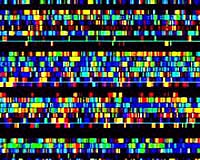
Toronto ON (SPX) Aug 30, 2005 Life at its most basic level - millions of chemical building blocks holding hereditary information - is controlled by genetic instructions, or genes, responsible for healthy development and protection against disease. By feeding biological data into an artificial intelligence program, University of Toronto researchers have uncovered these instructions to build mammalian life. A paper appearing in the Aug. 28 issue of Nature Genetics describes how researchers used an experimental procedure to peer into a mammalian cell and identify where the cell was reading genetic information. Efforts such as the Human Genome Project have revealed strings of DNA that contain the instructions controlling life, but the instructions themselves are hidden and cannot be found by studying DNA alone. By uncovering the genes, science is one step closer to targeting diseases such as cancer, where genetic instructions go haywire. "What the big research efforts in the past decade have done is create a large DNA textbook that contains within it instructions on how to build humans," says Professor Brendan Frey of the Edward S. Rogers Sr. Department of Electrical and Computer Engineering. "However, these projects haven't revealed exactly where and how cells read instructions from DNA. This is difficult because over 90 per cent of DNA within a mammalian cell is thought to perform no function." To hunt for genetic instructions, Frey, along with Professor Timothy Hughes and researchers from Mount Sinai Hospital and the Hospital for Sick Children in Toronto, explored samples from 37 mouse tissues to explore. They used microarrays - devices that probe for DNA sequences using complimentary nucleic acids - to light up regions of DNA that were being read by cells in diverse body parts such as the heart, lungs and brain. When nearby regions in the DNA have similar patterns of activity, this indicates they likely belong to a gene. "We were able to feed the patterns into an artificial intelligence computer program developed in my group," Frey says. "The computer analysis identified thousands of instructions and changed our view of how genes work." For example, their analysis showed that a region of the fourth chromosome which was thought to contain four short genes actually contains a single very long gene, which is now thought to be involved in the assembly of large protein molecules in the nucleus. By better understanding this and other genes, researchers hope to learn how these genes malfunction and cause disease. The program also revealed a startling discovery: there are no new protein-coding genes to be discovered - the genetic instructions that are largely responsible for managing cells, determining everything from eye colour to disease. By analysing the data and inferring the most likely genes based on user-programmed variables, the program matched what research has taken 30 years to discover. "This flies in the face of research that says there are many more protein-coding genes to be discovered," Hughes says. "We've reached a milestone in gene exploration." Frey says that while their work closes a chapter in genomics research, it opens several other major chapters, including the exploration of what functions the new genes perform and how the cell determines whether or not a gene should be read from the DNA. Further, the same piece of DNA can be read in different ways, leading to instructions that can have quite different consequences. To further investigate these issues, Frey and Hughes are collaborating with U of T Professor Benjamin Blencowe of the Banting and Best Department of Medical Research, Professor Robert Hegele at Robarts Research Institute and Professor Stephen Scherer at the Hospital for Sick Children. Genome Canada just announced they will support this effort with a $22-million grant. "I think that genomics research is one of the most compelling areas of science today," Frey says. "Many people I talk to, from my seven-year-old son to university students across multiple disciplines, are excited when they find out that we now have the capability to develop an understanding of one of the most fundamental aspects of life." The research was funded by the Premier's Research Excellence Award, the Canadian Institutes of Health Research, the Natural Sciences and Engineering Research Council of Canada and the Canada Foundation for Innovation. Community Email This Article Comment On This Article Related Links SpaceDaily Search SpaceDaily Subscribe To SpaceDaily Express Darwin Today At TerraDaily.com
 Panda Paparrazi Swoons Over Cub Tai Shan At Washington Zoo
 Washington (AFP) Nov 29, 2005
There was 'panda-monium' at Washington's National Zoo on Tuesday as fluffy giant panda cub Tai Shan cavorted for the cameras, in his first encounter with the media pack. |
|
|

| The content herein, unless otherwise known to be public domain, are Copyright 1995-2006 - SpaceDaily.AFP and UPI Wire Stories are copyright Agence France-Presse and United Press International. ESA PortalReports are copyright European Space Agency. All NASA sourced material is public domain. Additionalcopyrights may apply in whole or part to other bona fide parties. Advertising does not imply endorsement,agreement or approval of any opinions, statements or information provided by SpaceDaily on any Web page published or hosted by SpaceDaily. Privacy Statement |