
 |
 |
 |
 |
 |
 |
 |
 |
 |

 |
To Mercury with Love
Sydney - March 30, 1999 -  Sydney - March 30, 1999 - In July, the next Discovery mission to be developed by NASA will be announced. A panel of judges is reaching the end of a lengthy process of evaluations, trying to decide which of several enticing interplanetary romps deserves to leave the drawing board. They say that beauty is in the eye of the beholder, and it's true that each of the current set of finalists has its own attractions, but I certainly believe that one candidate deserves our admiration and support.
Let the Messenger fly! I refer, of course, to the Mercury Surface, Space Environment, Geochemistry and Ranging mission, one of the five candidates currently being studied. It's amazing to see such a long acronym that's actually applicable to both the mission and the target world, but Messenger's appeal doesn't end there. This mission proposal would represent the first serious effort to explore a planet that is frequently closer to the Earth than any other. A suite of remote sensing instruments and other sensors would map the planet from orbit and explore the dynamics of its interaction with the sun and near-space environment. Such measurements are the cornerstones of planetary science, yet this well-known world has been neglected for too long. Mercury has only received one visitor from Earth in more than 40 years of space exploration, and that was literally no more than a flying visit. The Mariner 10 probe, a lightweight and not particularly sophisticated robot, made three flybys of the planet between 1974 and 1975. Mariner 10 is often remembered for its engineering rather than its science. This was the first probe to encounter two planets, and the Mercury encounters were really the tail-end of a primary mission aimed at Venus. The flybys returned photography that made Mercury seem like a poor imitation of our own moon: small, cratered and airless. Imagery returned by the probe was also no more detailed than telescopic observations of our own moon from Earth. With this in mind, it's perhaps understandable why interest in Mercury fell away so rapidly. Who needs to explore a barren rock hugging the sun when there's a whole solar system out there? Today, we've been out to that solar system, and the current state of planetary exploration should make a mission to Mercury more appealing than ever. It's not simply a case of filling in a blank on our scorecard. Exploring Mercury would reveal more than just the nature of a single planet. Placed in the context of our detailed knowledge of several other worlds, it could be a mission to the solar system in general. Mercury is far stranger than simple photography would reveal. The planet has a large metallic core that wouldn't be out of place on an Earth-sized world. The core isn't thought to be molten, yet the planet still generates a magnetic field. One area of the Mercury has been wrinkled by shock waves generated by an impact on the other side of the planet. There's also an ongoing set of amazing interactions between the planet and the ferocious effects of the nearby sun. Planetary scientists will certainly supply more reasons to go, but this alone should entice the public. Now, take these same conditions, and compare them to data obtained from previous space missions to other terrestrial bodies. Suddenly, comparisons between Earth, Mars and Venus can be refined in the light of new data from a world that is small and rocky, but so different from its three cousins. By providing a closer examination of the planetary material that accumulated closest to the sun, models of the formation of the solar system itself will be further refined. These results can be predicted with certainty, but in exploration, the most valuable discoveries are usually unexpected. Planetary exploration has regularly produced surprises for even the most adventurous researchers, and Mercury probably holds secrets of its own. Messenger would also provide an important incremental step for more ambitious flights to come. Sample return is clearly the latest craze among mission planners, and both NASA and ESA have proposed returning caches of Hermean rock to Earth. It's wonderful that these agencies are considering such plans, but an expensive sample-return mission to Mercury should be planned with more data than we currently possess. The moon, Mars, comets and asteroids were all visited by several robot spacecraft before sample-return missions were approved. The data from these earlier missions helps in the interpretation of samples, and also aids the planning of the return missions themselves. Until precise knowledge is gained about the surface conditions of Mercury, a sample return cannot realistically be proposed. Japan is also considering an orbiter mission and possibly penetrators. Messenger would also help the planning of these missions, giving each nation that contributes a single flight the benefit of data from several complementary probes. Messenger would also be a technology-proving venture, establishing that a sophisticated spacecraft can operate for long periods under conditions that would fry most interplanetary probes. Missions to explore the sun itself at a very close range could also benefit from this demonstration of survivability. Of course, any of the Discovery candidates would be a suitable winner. Messenger, though, has already lost out in one previous round of Discovery selections and probably doesn't deserve to wait any longer. We need Messenger's data as soon as possible, to help serve as a measuring scale for the ever-growing fleet of spacecraft we're sending to Mars, and to help plan the next set of Mercury missions. Above all, Messenger would open up a world that's barely explored. Let the adventure begin!
Mercury at SpaceDaily.com
Email This Article Comment On This Article Related Links Space
 Satellite Launch To Boost DTH In India
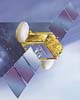 Calcutta, India (SPX) Dec 28, 2005
The successful launch Thursday of India's heaviest satellite from spaceport of Kourou in French Guyana may have boosted the country's space research efforts to yet another level, but it has also lifted the spirits of at least three Direct-To-Home televisions broadcasters, one of which has been waiting for years to launch its services in India. |
|
|

|
|
|
|
|
|
|
|
|
|
|
|
| The content herein, unless otherwise known to be public domain, are Copyright 1995-2006 - SpaceDaily.AFP and UPI Wire Stories are copyright Agence France-Presse and United Press International. ESA PortalReports are copyright European Space Agency. All NASA sourced material is public domain. Additionalcopyrights may apply in whole or part to other bona fide parties. Advertising does not imply endorsement,agreement or approval of any opinions, statements or information provided by SpaceDaily on any Web page published or hosted by SpaceDaily. Privacy Statement |

