
 |
 |
 |
 |
 |
 |
 |
 |
 |

 |
Tides of history: Tsunami hit Indian Ocean 600 years ago
Paris (AFP) Oct 29, 2008 A massive Indian Ocean tsunami, similar in size to the behemoth that claimed a quarter of a million lives in December 2004, smashed into Thailand and Indonesia around 600 years ago, scientists believe. The evidence comes from deposits of sand washed inland by colossal waves and preserved under layers of coastal peat, according to studies published in Thursday's issue of Nature, the London-based science journal. The December 2004 tsunami was triggered by an earthquake of 9.2 magnitude that ripped open the Sunda Trench -- the fault that zigzags up the eastern side of the Indian Ocean -- along 1,500 kilometres (950 miles). Around 220,000 people were killed in a dozen countries. The two teams pored over coastal areas in Indonesia and Thailand, seeking sheets of sand that had been deposited in past tsunamis but had been left undisturbed by wind, rivers, storms, animals or humans. They found the sedimentary treasure by drilling core samples in "swales," or dips between beach ridges, that are filled with peaty marsh. The Indonesian site was found around two kilometres (1.2 miles) inland north of the town of Meulaboh in Aceh province, on Sumatra's northern tip, where waves up to 35 metres (113 feet) above sea level were recorded in 2004. The Thai location was at Phra Thong Island, 124 kilometres (77 miles) north of the resort of Phuket, where the 2004 tsunami reached heights of up to 20 metres (65 feet). The age of the sand sheets was derived from carbon-dating organic debris collected just below the deposit. The Sumatra sand sheet was dated to 1290-1400 AD, and its apparent counterpart in Thailand to 1300-1450 AD. The clear proximity in dating suggests both deposits were left by the last big forerunner to the 2004 tsunami. The Indonesian researchers found an older sand sheet, dated to 780-900 AD, but there was only sketchy evidence to match this in Thailand. The Thai team also found a sand sheet that was dated to around 2,200 years old. In a commentary, Norwegian geologist Stein Bondevik said it was vital to confirm what these studies indicated -- that it may take some 600 years for stress to build on the Sunda Trench to the point that a 2004-style quake is unleashed. Events occurring on such a slow scale had major implications for urban and coastal planning, he said. "Inhabitants might consider the benefits of living close to the sea as greater than the risks of a catastrophic tsunami that will not return for many generations," he said. "Also, it does not make sense to invest in and maintain a warning system for devastating tsunamis if they recur so infrequently. "But smaller tsunamis may well happen more often, and a warning system could save lives during such event." The Aceh team, led by Katrin Monecke of the University of Pittsburgh, note that catastrophes which occur in the distant past are prone to fade from folk memory. In 2004, thousands of lives were saved on nearby Simeulue Island because the local population had been devastated by a tsunami in 1907, they note. Over several generations, parents taught their children to flee to high ground if they felt the ground shake, thus providing a "natural" tsunami warning system. Community Email This Article Comment On This Article Share This Article With Planet Earth
Related Links Bringing Order To A World Of Disasters When the Earth Quakes A world of storm and tempest
 Finding The Largest Tsunami Debris On The Planet
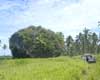 Boulder, CO (SPX) Oct 01, 2008
A line of massive boulders on the western shore of Tonga may be evidence of the most powerful volcano-triggered tsunami found to date. Up to 9 meters (30 feet) high and weighing up to 1.6 million kilograms (3.5 million pounds), the seven coral boulders are located 100 to 400 meters (300 to 1,300 feet) from the coast. |
|
|

| The content herein, unless otherwise known to be public domain, are Copyright 1995-2007 - SpaceDaily.AFP and UPI Wire Stories are copyright Agence France-Presse and United Press International. ESA Portal Reports are copyright European Space Agency. All NASA sourced material is public domain. Additional copyrights may apply in whole or part to other bona fide parties. Advertising does not imply endorsement,agreement or approval of any opinions, statements or information provided by SpaceDaily on any Web page published or hosted by SpaceDaily. Privacy Statement |
 del.icio.us
 Digg
Digg Reddit
 YahooMyWeb
 Google
 Facebook