|
 |
 |
 |
 |
 |
 |
 |
 |

 |
Third Mars Invasion Underway
Cape Canaveral - December 12, 1998 - A Boeing Delta2 lifted off Friday afternoon with NASA's Mars Climate Orbiter onboard and forming the first phase of Earth's second invasion of Mars. Launch was at 1:45:51pm EST. The probe is the 76th scientific mission to fly on a Delta rocket since 1961. Mars Orbiter joins a host of critical NASA payloads launched by Deltas including Deep Space 1, Advanced Composition Explorer, Near Earth Asteroid Rendezvous, Mars Pathfinder and Mars Global Surveyor. Overall, the Delta program boasts a better than 98 percent success rate for scientific missions. "Once again, the latest chapter in man's attempt to explore the solar system began here, on the launch pad, atop a Delta rocket," said Darryl Van Dorn, director of commercial and NASA Delta programs. "Our success here today is testament to the extraordinary partnership between NASA and the Delta launch team." The Mars Climate Orbiter was built by Lockheed Martin Astronautics in Denver, and is managed by the NASA Jet Propulsion Laboratory in Pasadena, Calif. The spacecraft will travel 10 months, arriving in October 1999. Upon arrival, the spacecraft will observe seasonal changes on the planet by mapping its surface for an entire Martian year (687 Earth days). The probe will examine the Martian climate and the presence of usable resources, and look for evidence of past life. The mission will provide an on-orbit data relay for the Mars Polar Lander mission, which Boeing will launch in January 1999. Additionally, the mission aims to establish the capability for future U.S. and international surface stations on Mars. The Delta II is a medium capacity expendable launch vehicle derived from the Delta family of rockets built and launched since 1960. The Delta II rocket is manufactured in Huntington Beach, Calif., with final assembly in Pueblo, Colo., and is powered by the RS-27A engine built by Boeing- Rocketdyne in Canoga Park, Calif. The Delta launch team at Cape Canaveral Air Station handles launch coordination and operations for NASA missions. Alliant Techsystems, Magna, Utah, builds the graphite epoxy motors for boost assist; Aerojet, Sacramento, Calif., supplies the second-stage engine; Cordant Technologies, Elkton, Md., builds the upper-stage engine; and AlliedSignal, Teterboro, N.J., provides the guidance and flight control system. Mars 98 Reports From Spacer.Com Mission Links
Mars Coverage at Spacer.Com
Future Missions
Areography
Pathfinder
Surveyor
Email This Article Comment On This Article Related Links Space
 Satellite Launch To Boost DTH In India
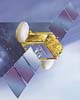 Calcutta, India (SPX) Dec 28, 2005
The successful launch Thursday of India's heaviest satellite from spaceport of Kourou in French Guyana may have boosted the country's space research efforts to yet another level, but it has also lifted the spirits of at least three Direct-To-Home televisions broadcasters, one of which has been waiting for years to launch its services in India. |
|
|

|
|
|
|
|
|
|
|
|
|
|
|
| The content herein, unless otherwise known to be public domain, are Copyright 1995-2006 - SpaceDaily.AFP and UPI Wire Stories are copyright Agence France-Presse and United Press International. ESA PortalReports are copyright European Space Agency. All NASA sourced material is public domain. Additionalcopyrights may apply in whole or part to other bona fide parties. Advertising does not imply endorsement,agreement or approval of any opinions, statements or information provided by SpaceDaily on any Web page published or hosted by SpaceDaily. Privacy Statement |