|
 |
 |
 |
 |
 |
 |
 |
 |

 |
Theory Stretches The Limits Of Composite Materials
Madison WI (SPX) Feb 01, 2007 In an advance that could lead to composite materials with virtually limitless performance capabilities, a University of Wisconsin-Madison scientist has dispelled a 50-year-old theoretical notion that composite materials must be made only of "stable" individual materials to be stable overall. Writing in the Feb. 2 issue of the journal Physical Review Letters, Engineering Physics Professor Walter Drugan proves that a composite material can be stable overall even if it contains a material having a negative stiffness, or one unstable by itself-as long as it is contained within another material that is sufficiently stable. "It's saying you're allowed to use a much wider range of properties for one of the two materials," he says. Comprising everything from golf clubs and bicycle frames to bridge beams and airplane wings, composite materials - or materials made by combining multiple distinct materials - deliver advantages over conventional materials including high stiffness, strength, lightness, hardness, fracture resistance or economy. "The idea is that you have one material with some great properties, but it also has some disadvantages, so you combine it with another material to try to ameliorate the disadvantages and get the best of both," says Drugan. Until now, materials engineers adhered to proven mathematical limits on composite performance, he says. "For example, if you give me two materials and one has one stiffness and the other has another stiffness, there are rigorous mathematical bounds that show that with these two materials, you cannot make a material that has a stiffness greater than this upper bound," says Drugan. "However, all these theoretical limits are based on the assumption that every material in the composite has a positive stiffness-in other words, that every material is stable by itself." When slightly disturbed, stable materials, like those with positive stiffness, return easily to their original state. A slightly compressed spring, for example, bounces back after the compression force is removed. Unstable materials, like those with negative stiffness, quickly collapse or undergo a large, rapid deformation at the slightest perturbation. In an example from the structures field, if a vertical column supports a load that becomes too great, even a slight disturbance can cause the column to buckle. The idea of incorporating a material with negative stiffness into a composite designed to be highly stiff originated with UW-Madison Wisconsin Distinguished Professor of Engineering Physics Roderic Lakes, says Drugan. Some six years ago, Lakes noticed that, in the mathematical formulas that predict how a composite will perform based on its component material properties, employing a material with a suitably chosen negative stiffness theoretically would yield an infinitely stiff composite. Lakes took his ideas into the lab, where he created such a composite by embedding a material that behaved like one with negative stiffness in a matrix of a material with positive stiffness-somewhat like the shell of a golf ball surrounds its core. Through dynamic experiments, conducted under oscillatory loading, he showed that the composite stiffness was greater than the mathematical bounds indicated it could be, given the combination of materials. Since Lakes' experiments were dynamic, and since dynamics often has a stabilizing effect, it remained unknown whether such material response could be obtained in the static loading case, which is practically important since many structural components are designed to support static loads. Lakes and Drugan, who have had a continuing research collaboration on this topic, published a 2002 paper in the Journal of the Mechanics and Physics of Solids in which they showed that if a composite material containing a negative-stiffness phase could be stable, and if they tuned the negative stiffness the right way, the predicted composite property could be infinite stiffness for a broad range of composite materials. Then Drugan set out to prove theoretically that such a material can be stable under static loading. "In general this is a very challenging problem, but I finally found a clean way to analyze it," he says. Drugan hopes his proof will awaken materials engineers to a new, broad range of possibilities for making composite materials. "If you're going to make a composite material from two different materials, you think about all the possible properties that each of the individual materials can have in order to obtain an outstanding overall performance," he says. "If you're suddenly able to greatly expand the range of properties that one of these materials can have, then you have a much wider range of possibilities for the overall composite. And that's what this research does. It says, 'You don't need to limit yourself to two stable materials anymore.'" Community Email This Article Comment On This Article Related Links University of Wisconsin-Madison All about the technology of space and more Space Technology News - Applications and Research
 First LISA Pathfinder Flight Unit Ready For Delivery On 8 February
 Paris, France (ESA) Feb 02, 2007
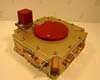
The first flight units for the LISA Pathfinder program are imminently nearing completion. All three Digital Sun Sensor's (DSS) have now completed manufacture and are currently undergoing final testing at supplier Galileo Avionica. A significant target has been achieved with the first flight unit having successfully completed all environmental testing. Its final testing is due to complete on 2 February with the unit scheduled to be ready for delivery on 8 February. |
|
|

| The content herein, unless otherwise known to be public domain, are Copyright 1995-2006 - SpaceDaily.AFP and UPI Wire Stories are copyright Agence France-Presse and United Press International. ESA PortalReports are copyright European Space Agency. All NASA sourced material is public domain. Additionalcopyrights may apply in whole or part to other bona fide parties. Advertising does not imply endorsement,agreement or approval of any opinions, statements or information provided by SpaceDaily on any Web page published or hosted by SpaceDaily. Privacy Statement |