|
 |
 |
 |
 |
 |
 |
 |
 |

 |
The "Yuan Zone" Is A Fool's Paradise
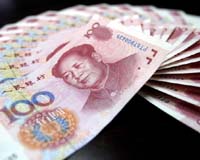
Washington (UPI) Aug 19, 2005 Mike Cosgrove argued in the Thursday's Wall Street Journal that the Bush administration committed an economic and foreign policy mistake by encouraging China to revalue its currency, because it halted the gradual dollarization under way in East Asia. In a nutshell, China has announced it will move toward a basket of currencies and de-emphasize the dollar in managing its currency. In turn, Cosgrove argues this will cause other East Asian central banks to do the same and for the Organization of Petroleum Exporting Countries to stop pricing oil in dollars. These are really two separate issues - dollarization and currency management. Although related, they need to be discussed separately, and not conflated into a bogus argument for ruinous monetary and currency policies. The United States has purposely discouraged the dollarization of other economies, and the reasons behind that policy are quite sound. The management of domestic money supplies is a central element of good macroeconomic policy, and with dollarization, the domestic supply of money becomes determined by the sum of a country's trade surplus and inward foreign investment. If those are too large, inflation results, and if they are too low, deflation and stagnation result. The only way an economy can dollarize and grow is to maintain perpetual and growing trade and investment surpluses. If every country dollarized then all would have to follow the same mercantilist policy. Sound like the gold standard? It is, with the United States printing the world's gold. Were the world to dollarize, the United States would have to have one whopping trade deficit and exodus of capital, as it faces ever slower growth to feed a world hungry for dollars. Initially, the United States would enjoy a rather high standard of living. As the world's appetite for dollars grew, our trade deficits would have to grow from 5 percent of gross domestic product, to 6, to 7 and so forth. As that number grew, we could work less and consume more. Great stuff Americans would become the landed aristocracy of a paper gold empire, that is until fickle foreign central banks woke up and realized the dollar wasn't worth anything anymore because Americans didn't make anything anymore. That brings me to the second issue - currency management. The world is moving perilously close to a dollar standard. Increasingly, central banks have backed up their money supplies by holding dollars, though many wisely let their currencies float, permitting some independence of monetary policy, and limit their purchases of dollars. Central banks have good reason to hold the dollar. The U.S. economy is about one-fifth of the global economy and quite diversified. You can still buy an enviable variety of American goods with dollars. Capital and property are safe and secure here, and U.S. Treasury securities are about the most bulletproof promissory notes on the planet. Consequently, most currency transactions take place through the dollar. You want won for pesos? You trade won for dollars and dollars into pesos. You want to hedge future transactions? Hedge through the dollar. Unfortunately, China and other Asian countries, by buying massive amounts of dollars to push up their trade surpluses, have abused the global trading system. Similarly, the United States has abused its seigniorage by printing too many bonds, because the president and Congress cannot demonstrate any reasonable measure of fiscal restraint. These combined policies are distorting capital markets in both China and the United States. China, to maintain its peg, is not permitting Chinese investors to diversify internationally and encouraging overinvestment in many industries (and I don't mean textiles and furniture) where it has little comparative advantage. U.S. trade deficits, which results from irresponsible Chinese exchange rate policies and American fiscal stupidity, are encouraging underinvestment in U.S. technology-intensive activities. We have a great housing boom instead! Over time, this will erode U.S. growth and make the dollar inherently less valuable, and encourages what Cosgrove wants to avoid - a flight from the dollar. I didn't have the advantages of many of my colleagues. I grew up blue collar, worked in a graveyard going through college and have calluses on my hands to this day. I learned one thing in that old Italian neighbor - thrift. The dual of that is you can't live well, forever, by borrowing from others. That is not the old fallacy of the national debt, which we owed ourselves. Rather if world dollarizes and we try to live well by printing the world's money, we will have ever larger trade deficits, ever larger homes and more SUVs, and smaller and smaller investments in industries that make things the world wants to buy. Sooner or later the world would wake up to fact that the dollars they are holding can't be traded for anything more than U.S. real estate and a wry smile an Uncle Sam's face. The world would hire someone else to print its gold. Then where would we be? (Peter Morici is a professor at the Robert H. Smith School of Business, University of Maryland) (United Press International's "Outside View" commentaries are written by outside contributors who specialize in a variety of issues. The views expressed do not necessarily reflect those of United Press International. In the interests of creating an open forum, original submissions are invited.) Community Email This Article Comment On This Article Related Links SpaceDaily Search SpaceDaily Subscribe To SpaceDaily Express China News from SinoDaily.com
 China Wants To Expand Sino-US Military Relations
 Beijing (AFP) Jan 10, 2006
China is ready to expand its military relations with the United States, Chinese Defense Minister Cao Gangchuan said on Tuesday. |
|
|

| The content herein, unless otherwise known to be public domain, are Copyright 1995-2006 - SpaceDaily.AFP and UPI Wire Stories are copyright Agence France-Presse and United Press International. ESA PortalReports are copyright European Space Agency. All NASA sourced material is public domain. Additionalcopyrights may apply in whole or part to other bona fide parties. Advertising does not imply endorsement,agreement or approval of any opinions, statements or information provided by SpaceDaily on any Web page published or hosted by SpaceDaily. Privacy Statement |