|
 |
 |
 |
 |
 |
 |
 |
 |

 |
The Western Challenge Facing Moscow
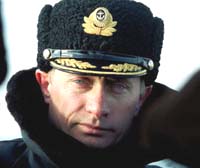
Washington (UPI) Jun 12, 2006 Many in the West do not see it as posing any sort of challenge to Russia. America, Europe, and Japan, either individually or in combination, have absolutely no intention of militarily intervening in Russia. Moscow, however, not only sees the West (especially the United States) as a security challenge, but as the most important one Russia faces. Just by its very existence, a prosperous, democratic West serves to undermine the legitimacy of a resource-rich but undemocratic Russia where most people are poor. Some might think that while this was true during the Soviet era, anti-Western sentiment in Russia has grown so strong since then that it is no longer so. However, the Putin administration's crackdown on Western non-governmental organizations and the Russian organizations they support indicate that the Kremlin remains deeply worried about the prospect of a Western-backed democratic opposition growing strong in Russia. In November 2005, the authors of an article in Kommersant, a Russian newspaper that still publishes articles critical of Kremlin policy, identified this as being Putin's main concern about Western NGOs: "The president's inflexibility on this matter is directly connected with the subject of a possible 'color revolution' in Russia, something that the Kremlin still regards as a major political threat... non-commercial organizations have been identified as the main channels by which the 'color contagion' is spread." Also of concern both to the Kremlin and much of the Russian public is the expansion of Western influence into countries where Moscow not only used to be influential, but still wants to be. Most of the former Warsaw Pact states of Eastern Europe and the three former Soviet Baltic republics are now members of both NATO and the EU. Two other former Soviet republics -- Georgia and Ukraine -- have come increasingly under Western influence. Others still might follow. Moscow sees this expansion of Western influence into Eastern Europe and certain former Soviet republics as aggressive moves to limit and weaken Russia. The Russians never seem to ask themselves, though, why it is that Western influence has been able to spread to these countries. Doing so would force them to acknowledge that governments and public opinion in these countries have themselves actively sought to join the West. Their motives include not only the desire for higher living standards, democratization, and the rule of law, but also the continued fear of Russia in these countries -- which Moscow's bullying reaction to their increased cooperation with the West only increases. Nor does there appear to be any appreciation in Moscow for the possibility that it might actually be in Russia's best interest that countries on its border come under Western influence, since this means that they are more likely to become stable and prosperous, and hence, not a threat to Russia. By contrast, unstable, impoverished neighbors -- even if they are in the Russian sphere of influence -- end up causing problems for Russia that Moscow cannot deal with on its own. But Moscow does not see things this way. It fears democratization encroaching on its borders because it fears democratization in Russia itself -- and all that it would do to destroy the existing power structure there. Further, Moscow reacts viscerally to the rise of Western influence on its borders even though this could actually be beneficial to Russia, because this threatens Russia's core self-image as a great power. Russia thus sees the West as a very serious threat. (Mark N. Katz is a professor of government and politics at George Mason University.)
Source: United Press International Community Email This Article Comment On This Article Related Links Follow the latest news on Superpowers in the 21st Century Learn about the Superpowers of the 21st Century at SpaceWar.com Learn about nuclear weapons doctrine and defense at SpaceWar.com
 China US Hold Military Talks Following Heated Exchanges
 Beijing (AFP) Jun 09, 2006
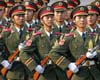
China and the United States held high-level talks here Thursday aimed at improving military ties, officials said, following recent heated exchanges between the two world powers over defense issues. |
|
|

| The content herein, unless otherwise known to be public domain, are Copyright 1995-2006 - SpaceDaily.AFP and UPI Wire Stories are copyright Agence France-Presse and United Press International. ESA PortalReports are copyright European Space Agency. All NASA sourced material is public domain. Additionalcopyrights may apply in whole or part to other bona fide parties. Advertising does not imply endorsement,agreement or approval of any opinions, statements or information provided by SpaceDaily on any Web page published or hosted by SpaceDaily. Privacy Statement |