|
 |
 |
 |
 |
 |
 |
 |
 |

 |
The Space Shuttle: Nasa's Aging Workhorse
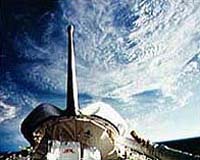
Cape Canaveral (AFP) Jul 10, 2005 The costly US space shuttle has long been NASA's pride, but the aging fleet is now slated for retirement in 2010 after construction of the International Space Station (ISS) has been completed. Developed in the 1970s, following NASA's glory days of Moon missions, the shuttle is the US government's only manned launch vehicle currently in service and the first designed for partial reusability. When it heads to the museum after three decades of service, it should be replaced by the Crew Exploration Vehicule, a craft yet to be designed that will take astronauts back to the Moon in 2020 in a prelude to missions in the further reaches of outer space. The shuttle, officially called the Space Transportation System (STS), first roared into orbit on April 12, 1981. Since then, Columbia, Challenger, Discovery, Atlantis and Endeavour flew 113 space missions that enabled 600 men and women to gain astronaut status. The five orbital crafts carried more than 1,360 tonnes of freight into space, including the Hubble Space Telescope and elements for the construction and servicing of the ISS. But not all the missions were successful. Challenger exploded on take-off January 28, 1986, and Columbia was destroyed as it burst into flames upon reentry into the atmosphere on February 1, 2003. A total of 14 astronauts were killed. The upcoming Discovery launch will be the first since the fleet was grounded following the Columbia disaster. The shuttle, which has more than two million components, is a highly complex and fragile piece of engineering, and one which critics say is far too costly. Its centerpiece is the plane-like reusable orbiter that can hold eight astronauts. It takes off vertically, attached to a large external fuel tank, to which a pair of reusable solid-fuel booster rockets are affixed. The shuttle's three main engines ignite six seconds before liftoff, and together with the solid rocket boosters, they provide the thrust to lift the orbiter off the ground for the initial ascent. About two minutes after liftoff, when the shuttle reaches an altitude of about 45 kilometers, the two rocket boosters burn out and jettison into the ocean, where NASA vessels recover them. The shuttle takes eight minutes and 40 seconds to reach orbit, at which stage the main engines shut off and the external tank separates, mostly disintegrating in the atmosphere. About 35 minutes later, the two orbital maneuvering systems' engines are used for about three minutes to place the shuttle into final orbit. Upon completion of the mission and reentry into the Earth's atmosphere, the orbiter glides to its landing, as it has no means of propulsion at that stage. Community Email This Article Comment On This Article Related Links SpaceDaily Search SpaceDaily Subscribe To SpaceDaily Express Space Shuttle News at Space-Travel.Com
 Heads Up, Space Station, Discovery Is Ready To Blast Off
 Cape Canaveral (AFP) Jul 12, 2005
A plastic and foam cover fell off a window of Discovery, but damage to the space shuttle was rapidly fixed and will not cause any delays, NASA said Tuesday on the eve of the planned launch. |
|
|

| The content herein, unless otherwise known to be public domain, are Copyright 1995-2006 - SpaceDaily.AFP and UPI Wire Stories are copyright Agence France-Presse and United Press International. ESA PortalReports are copyright European Space Agency. All NASA sourced material is public domain. Additionalcopyrights may apply in whole or part to other bona fide parties. Advertising does not imply endorsement,agreement or approval of any opinions, statements or information provided by SpaceDaily on any Web page published or hosted by SpaceDaily. Privacy Statement |