|
 |
 |
 |
 |
 |
 |
 |
 |

 |
The First Hiking Maps Of Mars
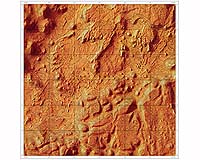
Paris, France (ESA) Feb 13, 2007 Scientists using data from the HRSC experiment onboard ESA's Mars Express spacecraft have produced the first 'hiker's maps' of Mars. Giving detailed height contours and names of geological features in the Iani Chaos region, the maps could become a standard reference for future Martian research. The maps are known as topographic maps because they use contour lines to show the heights of the landscape. The contour lines are superimposed upon high-resolution images of Mars, taken by the High-Resolution Stereo Camera (HRSC) onboard Mars Express. On Earth, such maps are used by hikers and planning authorities. They are known in the UK as ordinance survey maps. Every country has its own equivalent. The contour lines themselves were determined using data from the HRSC. This data has been transformed into three-dimensional computer models of Mars, known as the HRSC Digital Terrain Models (DTMs). The new maps have been produced under the leadership of the Principal Investigator (PI) G. Neukum (Freie Universitat Berlin), as part of the effort of the science and experiment team of the HRSC experiment, by J. Albertz and S. Gehrke of the Institute for Geodesy and Geoinformation Science, Technische Universitat Berlin, in cooperation with the German Aerospace Centre (DLR), Institute of Planetary Research, Berlin. They used the HRSC DTMs of the Iani Chaos region to produce a series of topographic maps at different scales, from 1:200 000 down to 1:50 000. The researchers chose the Iani Chaos region because of its major topographical interest. It is covered in individual blocks and hills that form a chaotic pattern across the landscape. These 'islands' of rocks are likely all that remains of a previous surface of Mars. The areas in between the islands collapsed when cavities formed below the surface. Initially these cavities may have been supported by the presence of ice, which melted due to volcanic heat. As the water flowed out into Ares Vallis, towards the northern lowlands of Mars, the landscape collapsed and formed the Iani Chaos region we see today. The contour lines help the eye to understand the morphology of the surface shown in the images. On most of the maps, each line represents a difference of 250 metres in height. The maps also display the names of geographical features and the lines of Martian longitude and latitude. The maps are a demonstration of the kind of products that can be derived from the HRSC experiment. The HRSC is on the way to providing enough data to create such maps for the whole of Mars. This would generate 10 372 particular map sheets, each covering an equal area of the Martian surface. The maps would be to a scale of 1:200000. Community Email This Article Comment On This Article Related Links Mars Express at ESA Mars News and Information at MarsDaily.com Mars News and Information at MarsDaily.com Lunar Dreams and more
 Opportunity Flips 10 Kilometers And Tests New Drive Software
 Pasadena CA (JPL) Feb 13, 2007
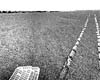
Opportunity has completed a remote sensing campaign at "Cape Desire" and is on the move to the next promontory, called "Cabo Corrientes." Opportunity's odometer rolled past 10 kilometers (6.2 miles) during the 50.51-meter (166 feet) drive on sol 1080. By contrast, the NASA Level 1 requirements for the mission called for achieving at least 600 meters (1,969 feet) with one rover, and the mission design requirement was for 1,000 meters (3,281 feet). |
|
|

| The content herein, unless otherwise known to be public domain, are Copyright 1995-2006 - SpaceDaily.AFP and UPI Wire Stories are copyright Agence France-Presse and United Press International. ESA PortalReports are copyright European Space Agency. All NASA sourced material is public domain. Additionalcopyrights may apply in whole or part to other bona fide parties. Advertising does not imply endorsement,agreement or approval of any opinions, statements or information provided by SpaceDaily on any Web page published or hosted by SpaceDaily. Privacy Statement |