|
 |
 |
 |
 |
 |
 |
 |
 |

 |
The Final Frontier: An Inevitable Military Battleground?
Colorado Springs - Jan 7, 2002 Among those who will benefit most directly, however, are the handful of giant aerospace corporations that vie for the multibillion-dollar government contracts to develop and build space systems -- including Boeing, TRW, Raytheon and Lockheed Martin. The major aerospace companies were directly involved in developing the U.S. Space Command's Long Range Plan and participated in meetings of the Space Commission. And while they have been influential political players ever since President Eisenhower warned of the "military-industrial complex" in his now-legendary 1961 speech, they appear to have unprecedented influence under the Bush administration, as pointed out by author Karl Grossman in an article in April's CovertAction Quarterly. Vice President Dick Cheney, Grossman noted, is a former board member of Cleveland-based TRW, and his wife, Lynne Cheney, served on the board of Lockheed Martin. Bruce Jackson, Lockheed Martin's vice president of corporate strategy, served as chairman of the Foreign Policy Platform Committee at the 2000 Republican National Convention. And recently, Bush nominated Peter Teets, a former Lockheed Martin top executive, to serve as undersecretary of the Air Force, with direct responsibility for all space-related matters. Estes himself does consulting work for the aerospace industry and serves on the board of SpaceDev Inc., which has some small contracts with the military for microsat developments. He maintains, however, that he has no personal interest at stake because he charges clients a flat fee and doesn't get paid based on what contracts they land. He lobbies politicians to support military activity in space, but not as a corporate pitchman, he says. "My integrity just won't let me do that," he said. "I'm doing this because I'm worried about the country." At Peterson in Colorado Springs, the presence of the corporations is evident. Los Angeles--based Northrop Grumman Corp. has erected a billboard near the entrance to the base, and TRW and Boeing, which recently relocated its headquarters to Chicago, carry large advertisements in the Space Observer, a base newspaper. The industry has also poured money into congressional campaign coffers. The Center for Responsive Politics reports that Allard, who sits on the Senate Armed Services Committee, received $24,500 from defense contractors in his 1996 bid for the Senate, with contributors including Northrop Grumman, as well as the Bethesda, Md.--based Lockheed Martin, Hartford, Conn.--based United Technologies Corp., Cleveland-based TRW and Lexington, Mass.--based Raytheon. In addition, Rep. Joel Hefley, R-Colo., who serves on the House Armed Services Committee, received $17,500 from defense contractors during his 2000 re-election bid, with donors including Lockheed Martin, Northrop Grumman, TRW, Raytheon and Boeing. Hefley did not respond to requests for an interview for this story. Allard, meanwhile, maintains the corporations have not influenced his positions with their contributions. "In fact, I'm not sure they gave me much," he said in a recent interview. Gagnon scoffs at the suggestion that campaign contributions don't make a difference. "The evidence, we all know, is everywhere," he said. "I always think about Eisenhower's warning to us, that he was telling us to watch out for this -- 'these guys are gaining unwarranted influence in the halls of Congress.' And now it's come to be true. It's sort of a bloodless coup d'�tat."
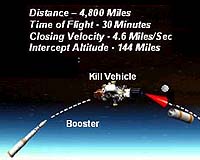
Pyramids to the heavens And, the cost to taxpayers will be staggering. Gagnon estimates the government has already spent $100 billion on the as-yet technologically unproven missile defense system [since Star Wars in the mid 1980s]. Developing the space-based laser program is estimated to cost another $30 billion. Politicians are unlikely to raise taxes to pay for the programs, so they'll go after the only other money available -- funding for programs such Social Security, Medicare, Medicaid and education, Gagnon predicts. "The aerospace corporations are the new pharaohs of our age, building these pyramids to the heavens," he said. "And we, the taxpayers, will be the slaves." Critics say that the waste is even greater considering that missile defense, the key military space program being pitched to the public, is unlikely to actually work. Most tests on the system have failed, and in those tests where the Pentagon claimed success, the parameters were so narrow they didn't take into account the unpredictable factors in a real-life attack, critics contend.

|