
 |
 |
 |
 |
 |
 |
 |
 |
 |

 |
Taking The Temperature Of The No-Fly Zone
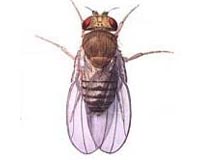
Waltham MA (SPX) Jun 13, 2008 Flies, unlike humans, can't manipulate the temperature of their surroundings so they need to pick the best spot for flourishing. New Brandeis University research in this week's Nature reveals that they have internal thermosensors to help them. Biologist Paul Garrity and his colleagues have discovered that the fruitfly Drosophila has four large heat-responsive neurons located in its brain. These are activated at temperatures just above the fly's preferred temperature by an ion channel in the cell membrane known as dTrpA1, which itself acts as a molecular sensor of warmth. This internal warmth-sensing pathway helps the fly to avoid slightly raised temperatures and acts together with a cold-avoidance pathway in the antennae to set the fly's preferred temperature-enabling the fly to pick its optimal ambient temperature range for survival. "We were very surprised to discover that flies used sensors in their brains to gauge environmental warmth. Large animals use peripheral neurons to monitor ambient temperature, and the prevailing view has been that the situation in small animals like fruit flies was similar," explained Garrity. He and his colleagues Fumika Hamada, Mark Rosenzweig, Kyeongjin Kang, Stefan Pulver, Alfredo Ghezzi, and Tim Jegla pursued several avenues hoping to find the peripheral warmth sensors, but in the end the data indicated that the critical sensors weren't peripheral after all, but rather tucked away inside the fly's head. "We don't know the details yet, but our data suggest dTRPA1 may function a bit like a fire alarm. When the temperature inside the fly's head gets too high, dTRPA1 activates these internal sensors that somehow help the fly move toward more hospitable climes," said Garrity. Despite the ubiquitous influence of environmental temperature on animal and human behavior, little is known about the mechanisms of neural circuits that drive animals to select a preferred temperature. This research brings scientists an important step closer to understanding how neurons help flies seek just the right temperature to ensure their survival. In turn, these neural circuits are also potential targets for disrupting thermal preference and other thermosensory behaviors in agricultural pests and disease vectors such as malaria- and dengue-fever mosquitoes, who use heat-seeking to locate prey. As global warming leads hundreds of species, including insects, fish, birds, and mammals to seek out different environments in which temperature is more optimal, understanding the molecules and the internal neural cues that drive these behaviors will shed light on the strategies animals use to cope with changes in their environments. Furthermore, the molecules that control these responses, like dTRPA1, are evolutionarily conserved proteins important for pain and inflammation in humans. A deeper understanding of how these proteins work will be important for devising new approaches and medicines for treating pain and inflammation. Community Email This Article Comment On This Article Share This Article With Planet Earth
Related Links Brandeis University Darwin Today At TerraDaily.com
 Scientists Examine Ecosystem Connectivity Using Long-Term Studies
 Washington, DC (SPX) Jun 11, 2008
Ecosystems are constantly exchanging materials through the movement of air in the atmosphere, the flow of water in rivers and the migration of animals across the landscape. People, however, have also established themselves as another major driver of connectivity among ecosystems. |
|
|

| The content herein, unless otherwise known to be public domain, are Copyright 1995-2007 - SpaceDaily.AFP and UPI Wire Stories are copyright Agence France-Presse and United Press International. ESA Portal Reports are copyright European Space Agency. All NASA sourced material is public domain. Additional copyrights may apply in whole or part to other bona fide parties. Advertising does not imply endorsement,agreement or approval of any opinions, statements or information provided by SpaceDaily on any Web page published or hosted by SpaceDaily. Privacy Statement |
 del.icio.us
 Digg
Digg Reddit
 YahooMyWeb
 Google
 Facebook