
 |
 |
 |
 |
 |
 |
 |
 |
 |

 |
Taking The Salt Out Of Sea Water
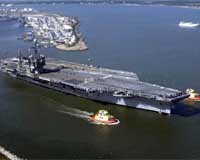
Boulder CO (SPX) Oct 03, 2008 The United Nations estimates that 1.1 billion people across the globe lack access to sustainable, clean drinking water and that 1.6 million children will die each year because of that lack of access. How can science help provide more drinkable water for a growing population on an Earth with limited fresh surface-water and groundwater resources? Geoscientist David Kreamer of the University of Nevada, Las Vegas, noting that at least 37% of the world's population lives within 100 kilometers of a coastline, says that desalinization -- removing salt from ocean water to create fresh water -- is a practical way to meet the growing human need. Desalinization is not a novel idea, says Kreamer. U.S. Navy aircraft carriers, for example, have had to generate fresh water to help sustain large crews while at sea for six months or more. In fact, says Kreamer, such ships are ideal platforms for desalinization. And what better use for large, mothballed ocean vessels currently dry-docked or cluttering working harbors? The U.S. alone has a fairly large mothball fleet, including U.S. Navy inactive ships and the U.S. Merchant Marine reserve fleet. Kreamer's work examines the practicality of recycling decommissioned U.S. Navy vessels, especially with an eye toward using old aircraft carriers, to become mobile desalinization plants. When ships meet the end of their service life with the U.S. Navy, they are often quite serviceable. Kreamer notes that the decommissioning of the John F. Kennedy multipurpose aircraft carrier in August 2007 saved the Navy about 1.2 billion U.S. dollars, yet the vessel itself is still sea worthy and could be a good candidate for work as a desalinization plant. A change in purpose would save money in other areas as well. The John F. Kennedy aircraft carrier had a crew of about 5,200, but says Kreamer, "You wouldn't have as many people working a desalinization plant." In his talk on 5 October at the 2008 Joint Meeting of The Geological Society of America, Soil Science Society of America, American Society of Agronomy, Crop Science Society of America, and Gulf Coast Association of Geological Societies, in Houston, Texas, USA, Kreamer will take a practical view of the advantages and disadvantages of using formerly mothballed ships to serve as mobile desalinization plants across the globe. Kreamer will also address how voyaging desalinization plans can (1) help reach more people in need - "they could outrun a hurricane and steam within days to an area of natural or man-made disaster"; (2) harness wind, wave, and solar power to help sustain operations; and (3) meet cost, center of gravity, and environmental concerns. Community Email This Article Comment On This Article Share This Article With Planet Earth
Related Links Geological Society of America Water News - Science, Technology and Politics
 Aquatic Plants Offer Cheap Method To Treat Wastewater
 Clemson SC (SPX) Oct 03, 2008
Nursery and greenhouse operations depend on the use of fertilizers, growth regulators, insecticides, and fungicides. Growers also rely on the use of soilless media, or substrate, in the production of container crops. |
|
|

| The content herein, unless otherwise known to be public domain, are Copyright 1995-2007 - SpaceDaily.AFP and UPI Wire Stories are copyright Agence France-Presse and United Press International. ESA Portal Reports are copyright European Space Agency. All NASA sourced material is public domain. Additional copyrights may apply in whole or part to other bona fide parties. Advertising does not imply endorsement,agreement or approval of any opinions, statements or information provided by SpaceDaily on any Web page published or hosted by SpaceDaily. Privacy Statement |
 del.icio.us
 Digg
Digg Reddit
 YahooMyWeb
 Google
 Facebook