|
 |
 |
 |
 |
 |
 |
 |
 |

 |
Taiwan To Mass Produce Supersonic Anti-Ship Missiles: Report
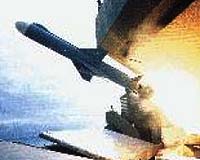
Taipei (AFP) Apr 11, 2005 Taiwan plans to mass produce supersonic anti-ship missiles to beef up the island's defense capabilities against China following successful test firings of the weaponry, a report said Monday. The defense ministry next year would set aside a budget for mass production of the Hsiung Feng III missile, which is expected to make its debut during the 2006 "Han Kuang 22" exercise, the Chinese-language China Times said. Given its speed and capability of flying at low altitude, the missile would be difficult to intercept, it said. The Hsiung Feng III is capable of cruising at mach 2.5 and has a range of up to 150 kilometers (90 miles), it said. Once the navy was equipped with the weaponry, the island would be one of the few countries in the world to be armed with supersonic anti-ship missiles, the paper said. The defense ministry declined to comment on the report The missile, developed by the military-run Chungshan Institute of Science and Technology, is expected to be a match for the Russia-made SS-N-22 Sunburn supersonic anti-ship missile China has obtained, it said. "Both missiles are close in precision and capabilities, but the Feng III is smaller, thus reducing the chance of its being detected." According to a report in Jane's Defense Weekly last year, the Hsiung Feng III can be fitted with a variety of guidance systems and function as an anti-ship, land-attack or anti-radar missile. Taiwan is striving to build up its missile defense capabilities to counter the military threat from China, which officials said was targeting the island with at least 700 ballistic missiles. Taiwan's cabinet last month approved a revised arms deal with the United States worth almost 15.5 billion dollars after the previous proposal was rejected by parliament. The arms package over a 15-year period from 2005, pending final approval by parliament, includes eight conventional submarines, a modified version of the Patriot anti-missile system and a fleet of anti-submarine aircraft. The massive budget proposal has stirred heated debate on the island as critics said the spending could further provoke China and heighten cross-strait tensions. Community Email This Article Comment On This Article Related Links SpaceDaily Search SpaceDaily Subscribe To SpaceDaily Express Learn about missile defense at SpaceWar.com All about missiles at SpaceWar.com
 Northrop Grumman Wins Contract For Target And Space-Launch Missile Work
 Reston VA (SPX) Jan 12, 2006
Northrop Grumman has been awarded a follow-on contract to provide technical support to the U.S. Air Force's Rocket Systems Launch Program (RSLP). |
|
|

| The content herein, unless otherwise known to be public domain, are Copyright 1995-2006 - SpaceDaily.AFP and UPI Wire Stories are copyright Agence France-Presse and United Press International. ESA PortalReports are copyright European Space Agency. All NASA sourced material is public domain. Additionalcopyrights may apply in whole or part to other bona fide parties. Advertising does not imply endorsement,agreement or approval of any opinions, statements or information provided by SpaceDaily on any Web page published or hosted by SpaceDaily. Privacy Statement |