|
 |
 |
 |
 |
 |
 |
 |
 |

 |
T-ray Breakthrough Signals Next Generation Of Security Sensors
London UK (SPX) Feb 06, 2008 A new generation of sensors for detecting explosives and poisons could be developed following new research into a type of radiation known as T-rays, published in Nature Photonics. The research shows that these T-rays, electromagnetic waves in the far infrared part of the electromagnetic spectrum that have a wavelength 500 times longer than visible light, can be guided along the surface of a specially designed material, known as a metamaterial. Being able to control T-rays in this way is essential if this type of radiation is to be used in many real world applications. Researchers believe one of the areas with the most potential to use T-rays is security sensing and scanning, because many of the molecules in explosives and biological agents like anthrax strongly absorb this radiation. If T-rays are tightly confined on surfaces in contact with such molecules then the detection sensitivity is greatly increased. Simple metallic surfaces have been used to control T-ray propagation before, but these only weakly guide the radiation, which extends as a weak field many centimetres above the surface of the material, thus rendering it less effective for sensing. The new study has now shown that a metamaterial surface draws T-rays close to it, creating a very strong field less than a millimetre above the surface. This greatly enhances the absorption by molecules on the surface making highly effective sensing techniques possible. The study was performed by a team of UK and Spanish physicists led in the UK by Dr Stefan Maier from Imperial College London's Department of Physics, and Dr Steve Andrews of the University of Bath. Dr Maier explains why their metamaterial design is so important: "T-rays have the potential to revolutionise security screening for dangerous materials such as explosives. Until now it hasn't been possible to exert the necessary control and guidance over pulses of this kind of radiation for it to have been usable in real world applications. "We have shown with our material that it is possible to tightly guide T-rays along a metal sheet, possibly even around corners, increasing their suitability for a wide range of situations." A metamaterial is a man-made material with designed electromagnetic properties which are impossible for natural materials to possess. The metamaterial created for this new research consists of a metallic surface textured with a two-dimensional array of pits. The researchers chose the dimensions of the pits so that T-rays are drawn closely to them as they travel along the surface. Dr Andrews says that although the results of their study are very promising, more work is needed to refine the technology before such surfaces can be used for sensing applications. "At the moment only a small number of the frequencies that make up a pulse of T-ray radiation are closely confined by our metamaterial. More sophisticated designs are needed in order to make sure that the whole pulse is affected by the surface structure, so that absorption features of molecules can be clearly identified." Dr Maier and Dr Andrews designed the metamaterial together with colleagues from Universities in Madrid and Zaragoza, with financial support from the US Air Force and the Royal Society. Their breakthrough is based on previous theoretical predictions obtained by the Spanish team together with Imperial's Professor John Pendry, published in Science in 2004. Community Email This Article Comment On This Article Related Links Imperial College London The latest in Military Technology for the 21st century at SpaceWar.com
 DRS Tech Gets Contract To Supply Marine Corps With Rugged Tablet Computers
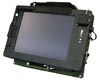 Parsippany NJ (SPX) Jul 10, 2007
DRS Technologies has received a $5 million award as part of a previous contract to provide military rugged tablet (MRT) computers and peripheral equipment for the U.S. Marine Corps' Target Location Designation Handoff System (TLDHS) program. DRS received the order from Stauder Technologies in St. Peters, Missouri. For this contract the company's DRS Tactical Systems business unit in Melbourne, Florida, will produce hundreds of the handheld MRT computers and peripheral equipment. |
|
|

| The content herein, unless otherwise known to be public domain, are Copyright 1995-2007 - SpaceDaily.AFP and UPI Wire Stories are copyright Agence France-Presse and United Press International. ESA Portal Reports are copyright European Space Agency. All NASA sourced material is public domain. Additional copyrights may apply in whole or part to other bona fide parties. Advertising does not imply endorsement,agreement or approval of any opinions, statements or information provided by SpaceDaily on any Web page published or hosted by SpaceDaily. Privacy Statement |