|
 |
 |
 |
 |
 |
 |
 |
 |

 |
THAAD Flight Test Demonstrates Divert And Attitude Control System
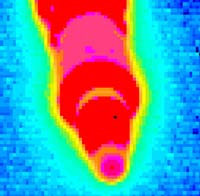
Canoga Park CA (SPX) Nov 25, 2005 When the U.S. Missile Defense Agency's Terminal High Altitude Area Defense (THAAD) weapon system released its "kill vehicle" in a successful test flight on November 22, it was a new Divert and Attitude Control System (DACS) from Pratt & Whitney Rocketdyne that powered the weapon on a precise path. This flight test demonstrated THAAD interceptor performance. It verified the DACS system design in a demanding flight scenario. The DACS system provided roll control of the THAAD missile during booster flyout and maneuver of the kill vehicle using a half-dozen small, liquid-fueled thrusters that allow THAAD to alter direction and attitude in mere milliseconds. "It was impressive to see the DACS system in action," said Bill Burns, division director, attitude control propulsion systems. "The DACS on the test bed is one thing, but as part of THAAD in a real-time mission scenario was very satisfying." THAAD is a key element of the Ballistic Missile Defense System (BMDS) and will provide rapidly deployable ground-based missile defense components. These deepen and extend the BMDS to the Combatant Commander, enabling the defeat of ballistic missiles of all types and ranges, and in all phases of flight. Lockheed Martin is the prime contractor and systems integrator for the THAAD program. Community Email This Article Comment On This Article Related Links Pratt & Whitney Rocketdyne SpaceDaily Search SpaceDaily Subscribe To SpaceDaily Express Learn about missile defense at SpaceWar.com Learn about nuclear weapons doctrine and defense at SpaceWar.com All about missiles at SpaceWar.com Learn about the Superpowers of the 21st Century at SpaceWar.com
 Missile Defense Program Moves Forward
 Washington DC (AFPS) Jan 12, 2006
The Missile Defense Agency continues to move forward in its efforts to protect the nation against a ballistic missile attack. The eighth ground-based interceptor missile was lowered into its underground silo at Fort Greely, Alaska, Dec. 18, 2005. |
|
|

| The content herein, unless otherwise known to be public domain, are Copyright 1995-2006 - SpaceDaily.AFP and UPI Wire Stories are copyright Agence France-Presse and United Press International. ESA PortalReports are copyright European Space Agency. All NASA sourced material is public domain. Additionalcopyrights may apply in whole or part to other bona fide parties. Advertising does not imply endorsement,agreement or approval of any opinions, statements or information provided by SpaceDaily on any Web page published or hosted by SpaceDaily. Privacy Statement |