|
 |
 |
 |
 |
 |
 |
 |
 |

 |
Surrey Successfully Demonstrates Steam Micro-Propulsion In-Orbit
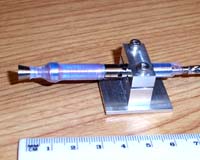
Guildford - Mar 17, 2004 SSTL have demonstrated in-orbit the use of a steam propulsion system onboard the UK-DMC satellite, launched on 27th September 2003. The novel micro-propulsion experiment used 2.06 grams of water as propellant. This 'green' propellant is non-toxic, non-hazardous to ground operators and results in improved specific impulse over conventional cold gas nitrogen, at a significantly lower cost. During the first in-orbit firing, the thruster was pre-heated to 200 degrees. Pre-heating ensures that no liquid phase water is ejected, only steam. The spacecraft experienced 3.3 milliNewtons of thrust over a 30 second period. Designed and built in-house at SSTL, the miniature resistojet, weighing 13 grams, uses just 3 Watts of power to heat the propellant, emitting steam through a conventional rocket nozzle to generate thrust. The hotter the propellant, the higher specific impulse performance achieved. The thruster is mounted in such a way that it produces a yaw torque around the spacecraft's gravity gradient boom. After the firing, the spacecraft's Attitude Control System detected a yaw disturbance of 55 degrees. The yaw disturbance was corrected by actuating the yaw reaction wheel and the change in speed of the wheel enabled the thruster's firing parameters to be calculated.
SSTL acknowledge the assistance of the European Space Agency (ESA) for sponsoring the programme, and Polyflex Space Ltd (UK) and ALTA S.r.l. (Italy) for their support. Community Email This Article Comment On This Article Related Links Surrey Satellite Technology SpaceDaily Search SpaceDaily Subscribe To SpaceDaily Express Microsat News and Nanosat News at SpaceMart.com
 Small Satellite Solutions From Scotland
 Clyde, Scotland (SPX) Jan 12, 2006
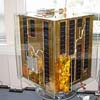
Clyde Space are offering the growing ranks of small satellite manufacturers power subsystem solutions for their missions. Based in purpose built facilities on West of Scotland Science Park in Glasgow, Clyde Space has a range of power subsystems for missions from as little as 1W up to in excess of 2.5kW. |
|
|

| The content herein, unless otherwise known to be public domain, are Copyright 1995-2006 - SpaceDaily.AFP and UPI Wire Stories are copyright Agence France-Presse and United Press International. ESA PortalReports are copyright European Space Agency. All NASA sourced material is public domain. Additionalcopyrights may apply in whole or part to other bona fide parties. Advertising does not imply endorsement,agreement or approval of any opinions, statements or information provided by SpaceDaily on any Web page published or hosted by SpaceDaily. Privacy Statement |