|
 |
 |
 |
 |
 |
 |
 |
 |

 |
Sumatra Earthquake Three Times Larger Than Originally Thought
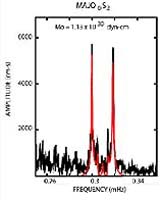
Evanston IL (SPX) Feb 08, 2005 Northwestern University seismologists have determined that the Dec. 26 Sumatra earthquake that set off a deadly tsunami throughout the Indian Ocean was three times larger than originally thought, making it the second largest earthquake ever instrumentally recorded and explaining why the tsunami was so destructive. By analyzing seismograms from the earthquake, Seth Stein and Emile Okal, both professors of geological sciences in Northwestern's Weinberg College of Arts and Sciences, calculated that the earthquake's magnitude measured 9.3, not 9.0, and thus was three times larger. These results have implications for why Sri Lanka suffered such a great impact and also indicate that the chances of similar large tsumanis occurring in the same area are reduced. "The rupture zone was much larger than previously thought," said Stein. "The initial calculations that it was a 9.0 earthquake did not take into account what we call slow slip, where the fault, delineated by aftershocks, shifted more slowly. The additional energy released by slow slip along the 1,200-kilometer long fault played a key role in generating the devastating tsunami." The large tsunami amplitudes that occurred in Sri Lanka and India, said tsunami expert Okal, result from rupture on the northern, north-trending segment of the fault - the area of slow slip - because tsunami amplitudes are largest perpendicular to the fault. Because the entire rupture zone slipped (both fast and slow slip fault areas), strain accumulated from subduction of the Indian plate beneath the Burma microplate has been released, leaving no immediate danger of a comparable ocean-wide tsunami being generated on this segment of the plate boundary. However, the danger of a local tsunami due to a powerful aftershock or a large tsunami resulting from a great earthquake on segments to the south remains. The analysis technique used by Stein and Okal to extract these data from the earth's longest period vibrations (normal modes) relied on results developed by them and colleague Robert Geller (now at the University of Tokyo) in their graduate studies almost 30 years ago. However, because such gigantic earthquakes are rare, these methods had been essentially unused until records of the Sumatra earthquake on modern seismometers became available. The largest earthquake ever recorded, which measured 9.5, was in Chile on May 22, 1960. Community Email This Article Comment On This Article Related Links SpaceDaily Search SpaceDaily Subscribe To SpaceDaily Express Tectonic Science and News
 Ash Continuing To Spew From Vanuatu Volcano
 Sydney (AFP) Dec 12, 2005
Thousands of tonnes of ash are continuing to spew from a volcano in Vanuatu, but officials said Monday the activity on the South Pacific nation was not likely to result in a major deadly eruption. |
|
|

| The content herein, unless otherwise known to be public domain, are Copyright 1995-2006 - SpaceDaily.AFP and UPI Wire Stories are copyright Agence France-Presse and United Press International. ESA PortalReports are copyright European Space Agency. All NASA sourced material is public domain. Additionalcopyrights may apply in whole or part to other bona fide parties. Advertising does not imply endorsement,agreement or approval of any opinions, statements or information provided by SpaceDaily on any Web page published or hosted by SpaceDaily. Privacy Statement |