|
 |
 |
 |
 |
 |
 |
 |
 |

 |
Studies On Electric Polarization Open Potential For Tinier Devices
Argonne Il (SPX) Jun 14, 2004 Researchers from the U.S. Department of Energy's Argonne National Laboratory and Northern Illinois University have shown that very thin materials can still retain an electric polarization, opening the potential for a wide range of tiny devices. The researchers found that the ferroelectric phase � the ability to hold a switchable electric polarization � is stable for thicknesses as small as 1.2 nanometers, one-billionth of a meter, or a size several hundred thousand times smaller than the period at the end of this sentence. Previous studies had found that, as the material became too thin, it quit being a ferroelectric. These new results, however, suggest that small thicknesses do not pose a fundamental problem to building very small devices based on these materials. The research is published in the June 11 issue of Science magazine. "The natural ordering of the atoms in their crystal structure cause these materials to be electrically polarized," said researcher Carol Thompson of NIU. "This means that, in the jargon of the scientists, these ferroelectric materials exhibit rich and complex couplings between their optical, chemical, mechanical, structural and thermal properties. Alterations of the natural structure due to size and surface effects will perhaps destroy their ability to perform as ferroelectrics. However, we will be relying on these materials to behave themselves. Will they? The research suggests that they will behave better than we had any right to expect before." An increasingly wide range of applications are based on ferroelectric thin films, including sensors, microelectromechanical systems and memory systems. Studies of ferroelectrics have become more intense in recent years, as devices � and the materials and thin films used to manufacture them � have become smaller, moving to the micro- and even the nano-scale, creating machines and building blocks of electronic devices smaller than the width of a human hair. The technological potential of these materials depends on maintaining a stable ferroelectric phase as devices continue to be miniaturized. The researchers used the powerful X-ray beams from the Advanced Photon Source at Argonne � the nation's most brilliant X-rays � to monitor the electric transition in thin films as they are grown, layer by layer. Argonne is building a new Center for Nanoscale Materials that will provide enhanced capability to fabricate and study novel materials and devices at the nanoscale. The authors are D.D. Fong, G.B. Stephenson, S.K. Streiffer, J.A. Eastman, Orlando Auciello and P.H. Fuoss of Argonne and Carol Thompson of NIU. Funding is provided by the Office of Basic Energy Sciences, part of the Department of Energy's Office of Science, and by the State of Illinois. Community Email This Article Comment On This Article Related Links Argonne National Laboratory Advanced Photon Source SpaceDaily Search SpaceDaily Subscribe To SpaceDaily Express Space Technology News - Applications and Research
 Industry Team Achieve New Communications Technology With AESA Radars
 Baltimore MD (SPX) Jan 12, 2006
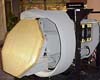
A team comprised of three leading US aerospace and defense contractors has demonstrated an innovative technological use of active electronically scanned array (AESA) radars for high-bandwidth communications. |
|
|

| The content herein, unless otherwise known to be public domain, are Copyright 1995-2006 - SpaceDaily.AFP and UPI Wire Stories are copyright Agence France-Presse and United Press International. ESA PortalReports are copyright European Space Agency. All NASA sourced material is public domain. Additionalcopyrights may apply in whole or part to other bona fide parties. Advertising does not imply endorsement,agreement or approval of any opinions, statements or information provided by SpaceDaily on any Web page published or hosted by SpaceDaily. Privacy Statement |