
 |
 |
 |
 |
 |
 |
 |
 |
 |

 |
Student study unmasks sushi scandal in New York
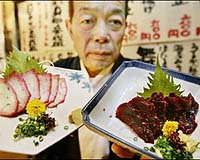
New York (AFP) Aug 22, 2008 A fourth of the fish for sale in New York City markets and sushi restaurants is mislabeled, a study launched by two high school students has found. Cheap fish masquerading as fancy and endangered species disguised as eco-friendly have both been busted by the enterprising young scientists and a new technique called DNA bar coding, the New York Times said Friday. Kate Stoeckle, 19, and Louisa Strauss, 18, collected 60 samples of seafood from four restaurants and ten stores in Manhattan, preserved them in alcohol and sent them to the University of Guelph in Ontario, Canada for genetic analysis. Stoeckle's father Mark Stoeckle is an expert on birds and a proponent of DNA bar coding, a field developed since 2003, in which scientists use a single gene to identify a species rather than the entire genome, the daily said. One evening, over dinner at a sushi restaurant, Stoeckle asked her father if the technique could be used on sushi, and a high school science project was born. In Canada, Guelph graduate student Eugene Wong compared the DNA of the samples the young women sent him to a global library of 30,562 "bar codes" representing nearly 5,500 fish species, the Times said. The DNA revealed that two of the four restaurants and six of the 10 grocery stores mislabelled their fish, the Times said. Wong and biology professor Robert Hanner collected another 40 samples in Toronto and in Guelph. "This not only raises concerns of consumer fraud, but also public health," said Hanner, also associate director for the Canadian Barcode of Life Network, in a statement on the University of Guelph website. "A person could have allergies to a certain species and if it's mislabelled that could have dangerous consequences," Hanner said. Among the findings was Mozambique tilapia, a cheap fish that is usually farm-raised, sold as pricey white tuna. Flying fish roe actually came from the humble smelt, and seven out of nine fish labelled "red snapper" were not. Atlantic Halibut, classified as endangered in the wild, was labelled and sold as Pacific Halibut, a species labelled a "best choice" for human consumption by environmentalists, the University of Guelph statement said. "Consumers may think they are doing the right thing for the environment by buying a certain type of fish that is eco-friendly when really they could actually still be buying exploited species," Hanner stressed. Researchers have been working to identify and catalogue species from around the world using barcode technology and so far, more than 5,000 of the approximate 30,000 species of fish have been barcoded, the statement said. The study will be published next week in the journal of Food Research International, the University of Guelph statement said. Community Email This Article Comment On This Article Share This Article With Planet Earth
Related Links Farming Today - Suppliers and Technology
 Tracking A Crop Disease Could Save Millions Of Lives
 London, UK (SPX) Aug 22, 2008
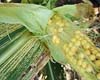
Scientists have discovered why one of the world's most important agricultural diseases emerged, according to research published in the September issue of the Journal of General Virology. Maize streak virus (MSV) causes the main virus disease of Africa's most important food crop. |
|
|

| The content herein, unless otherwise known to be public domain, are Copyright 1995-2007 - SpaceDaily.AFP and UPI Wire Stories are copyright Agence France-Presse and United Press International. ESA Portal Reports are copyright European Space Agency. All NASA sourced material is public domain. Additional copyrights may apply in whole or part to other bona fide parties. Advertising does not imply endorsement,agreement or approval of any opinions, statements or information provided by SpaceDaily on any Web page published or hosted by SpaceDaily. Privacy Statement |
 del.icio.us
 Digg
Digg Reddit
 YahooMyWeb
 Google
 Facebook